
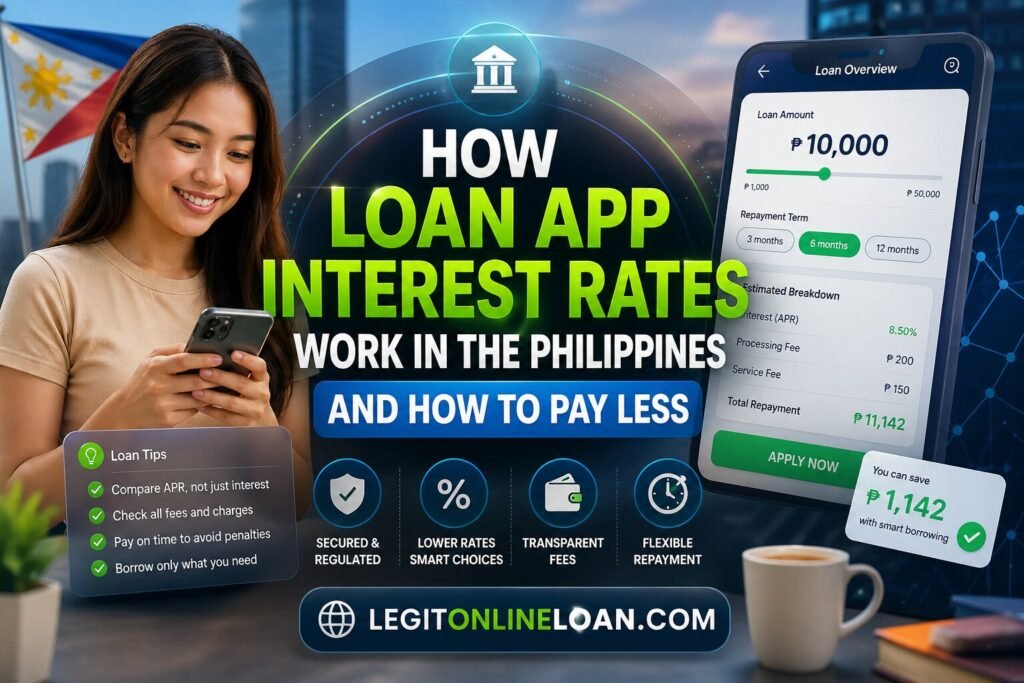
Loan apps have transformed how Filipinos access credit. Within minutes, borrowers can receive funds directly into their e-wallets or bank accounts. But behind this convenience lies a complex system of interest rates, fees, and repayment structures that can significantly affect how much you actually pay.
If you’ve ever compared different loan interest rates Philippines online apps, you’ve probably noticed that the numbers vary widely. Some seem affordable at first glance, while others appear expensive – but the truth often lies deeper.
This article breaks down how interest rates work, how lenders calculate costs, why rates differ, and most importantly – how you can pay less.
🧠 The Key Players: Lenders, Borrowers, and Regulators
Before diving into numbers, it’s important to understand the ecosystem.
🏦 Lenders: Digital and Traditional
Online loan apps are operated by:
- Fintech companies
- Lending corporations
- Banks offering digital services
Each lender sets its own pricing model based on risk, operational costs, and competition.
👤 Borrowers: Diverse Financial Profiles
Borrowers in the Philippines range from:
- Salaried employees
- Freelancers and gig workers
- Individuals with limited credit history
Your financial profile directly impacts the interest rate offered to you.
🏛️ Financial Regulators
Government bodies such as:
- Securities and Exchange Commission (SEC)
- Bangko Sentral ng Pilipinas (BSP)
These institutions enforce rules to protect borrowers, including transparency in fees and fair lending practices.
📊 What Exactly Is Interest in Loan Apps?
At its simplest, interest is the cost of borrowing money. But loan apps rarely present it in a straightforward way.
💡 Two Common Ways Interest Is Shown
- Daily Interest Rate
- Example: 0.8% per day
- Often used in short-term loans
- Monthly Interest Rate
- Example: 5% per month
- Common for installment loans
These figures may look small – but when compounded or combined with fees, they can become expensive.
📉 APR: The Real Cost You Should Focus On
❓ What is APR?
APR (Annual Percentage Rate) represents the total yearly cost of a loan, including:
- Interest
- Service fees
- Processing charges
It gives a clearer picture than just looking at daily or monthly rates.
⚠️ Why APR Matters More Than Advertised Rates
A loan app might advertise:
- “0% interest”
But still charge:
- Processing fee: ₱500
- Service fee: ₱300
In reality, you’re still paying for the loan.
👉 This is why comparing legit low interest loan apps requires looking at APR – not just headline rates.
🔄 How Interest Compounding Works
Interest in many loan apps doesn’t just stay fixed – it compounds.
📌 Simple vs. Compound Interest
- Simple Interest
Calculated only on the original loan amount. - Compound Interest
Calculated on:- Original amount
- PLUS accumulated interest
📈 Why Compounding Increases Your Debt
If you delay payments:
- Interest keeps adding up
- Your total repayment grows faster than expected
This is especially common in short-term loan apps with daily rates.
💰 Hidden Costs That Increase Your Loan
Interest isn’t the only cost. Many borrowers overlook additional fees.
⚠️ Common Hidden Fees
- Processing fees
- Service charges
- Late payment penalties
- Early repayment penalties (in some apps)
📊 Sample Cost Breakdown
| Loan Amount | Advertised Rate | Fees | Total Repayment |
|---|---|---|---|
| ₱5,000 | 0% | ₱800 | ₱5,800 |
| ₱5,000 | 5% monthly | ₱200 | ₱5,450 |
👉 Even with “0% interest,” you may pay more.
🤔 Why Loan App Interest Rates Differ So Much
📌 Risk-Based Pricing
Lenders assess:
- Credit history
- Income stability
- Repayment behavior
Higher risk = higher interest rates.
📱 Technology and Data Use
Loan apps use:
- Mobile data
- Behavioral analytics
- Alternative credit scoring
Apps with more advanced systems may offer lower rates to qualified users.
🏦 Business Models
Some apps:
- Focus on volume (lower rates, more users)
- Others focus on high-risk borrowers (higher rates)
This is why comparing the best loan apps Philippines requires looking beyond marketing claims.
🧮 How to Calculate the True Cost of a Loan
Let’s break it down in a practical way.
Step-by-Step Calculation
- Identify loan amount
- Add all fees
- Calculate total repayment
- Compare with original amount
📌 Example
- Loan: ₱10,000
- Interest: 10% monthly
- Term: 1 month
- Fees: ₱500
Total repayment:
- Interest: ₱1,000
- Fees: ₱500
- Total: ₱11,500
👉 Effective cost: 15%
🔍 Comparing Loan Apps the Smart Way
When choosing between loan apps, don’t rely on surface-level numbers.
✔️ What to Compare
- APR (if available)
- Total repayment amount
- Loan term flexibility
- Penalty structure
📊 Quick Comparison Checklist
- Does the app clearly show all fees?
- Is the interest fixed or variable?
- Are there penalties for late payment?
These factors matter more than flashy “low interest” claims.
💡 How to Pay Less on Loan Apps
📉 Choose the Right Loan Type
- Short-term loans → higher daily rates
- Installment loans → more manageable payments
If possible, opt for longer terms with lower monthly rates.
⏱️ Pay Early or On Time
Late payments trigger:
- Penalties
- Compounded interest
Paying early can:
- Reduce interest
- Improve your credit profile
📊 Borrow Only What You Need
Higher loan amounts = higher total interest.
Avoid borrowing extra “just in case.”
🔁 Build a Good Borrower Profile
Consistent repayment:
- Unlocks lower rates
- Increases loan limits
This is especially helpful when using loan apps for bad credit trying to rebuild financial trust.
📌 Real-Life Cost Comparison
Imagine choosing between two loan apps:
Option A:
- ₱5,000 loan
- 0% interest
- ₱1,000 fees
- Repayment: ₱6,000
Option B:
- ₱5,000 loan
- 8% interest
- ₱200 fees
- Repayment: ₱5,600
👉 Option B is clearly cheaper – even with interest.
This highlights why understanding cost structure matters.
❓ Frequently Asked Questions
What is APR?
APR is the total yearly cost of borrowing, including interest and fees. It helps you compare loans accurately.
Why do rates differ between loan apps?
Rates vary due to:
- Risk assessment
- Business models
- Technology used
- Borrower profile
Are “0% interest” loans really free?
Not always. Many include:
- Processing fees
- Service charges
Always check total repayment.
What happens if I miss a payment?
You may face:
- Late fees
- Increased interest
- Negative credit impact
Which is better: daily or monthly interest?
Monthly rates are usually easier to manage and often cheaper in the long run.
🚀 Smart Borrowing Tips for Filipinos
- Always compute total repayment before applying
- Avoid stacking multiple loans
- Read terms and conditions carefully
- Stick to regulated and transparent lenders
✅ Final Thoughts: Control the Cost, Not Just the Loan
Loan apps are powerful financial tools – but only when used wisely.
The key isn’t just finding fast approval or high limits. It’s understanding:
- How interest works
- How fees are structured
- How your behavior affects costs
When you shift your focus from “how much I can borrow” to “how much I will repay,” you gain control.
Make informed choices, compare wisely, and prioritize lenders that are transparent and fair. That’s how you truly pay less – and borrow smarter.
🔗 Suggested Reading
If you’re exploring options, check out:
- legit low interest loan apps
- best loan apps Philippines
- loan apps for bad credit
| Online Loans | Amount |
| 🔰️ Online Loans US | $100 – $5,000 |
| 🔰️ Online Loans UK | $100 – $5,000 |
| 🔰️ Online Loans Pilipinas | ₱ 1000 – ₱ 25,000 |
| 🔰️ Vay Tiền Online VN | 1 triệu – 14 triệu VNĐ |
| 🔰️ Online Loans Sri Lanka | Rs 8000 – Rs 50,000 |
| 🔰️ Préstamos Online México | $ 1,000 – $ 150,000 |
| 🔰️ Préstamos Online en España | 50€ – 300€ |
| 🔰️ Pożyczki Online Polska | 500 PLN – 15000 PLN |