
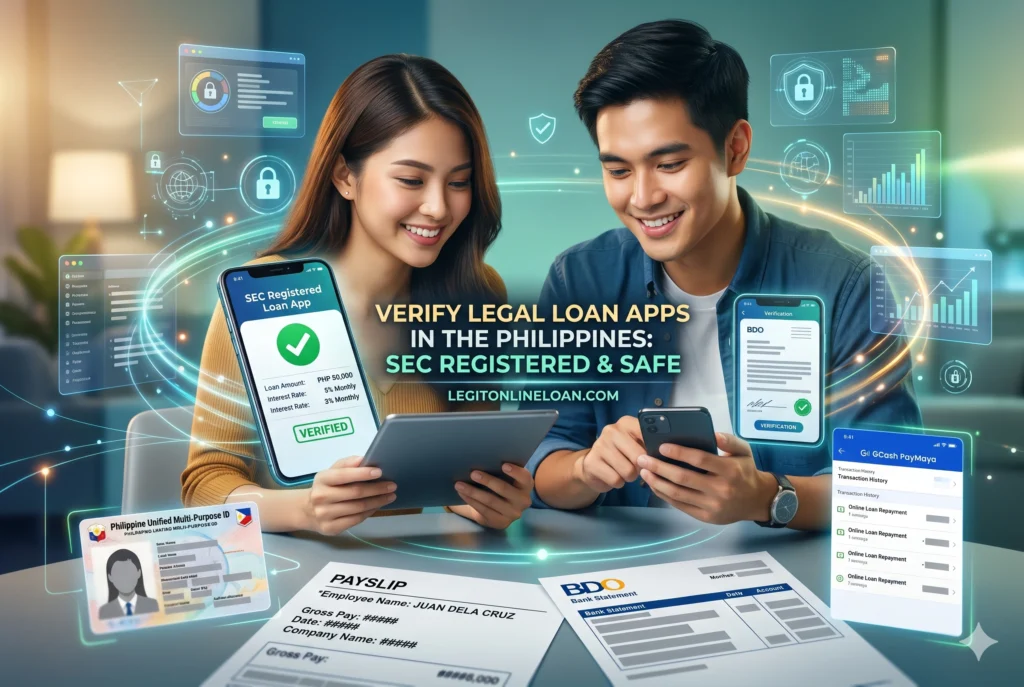
Many Filipinos now rely on mobile lending apps for emergency cash, salary gaps, medical expenses, tuition, or short-term liquidity. But the rise of app-based borrowing also created a wave of fake lenders, privacy abuse complaints, illegal collection tactics, and cloned applications pretending to be legal financial companies.
If you searched for a legit online loan app SEC registered, you are already asking the right question.
A legal online lending app in the Philippines should not only appear on the Google Play Store or Apple App Store. It should also operate under proper registration, comply with lending regulations, maintain borrower privacy protections, and follow lawful collection practices.
This article explains how borrowers can verify if a lending app is genuinely operating legally, what SEC registration actually means, how to spot fake or risky apps, and why even registered lenders still reject applications or receive complaints.
Summary
A legit online loan app SEC registered in the Philippines should have valid registration with the Securities and Exchange Commission, proper lending authority, transparent borrower terms, lawful collection behavior, and responsible data privacy practices. Borrowers should verify lender names through official SEC Philippines records, check privacy compliance indicators, review app permissions carefully, and avoid apps using harassment, hidden fees, or suspicious SMS promotions. SEC registration alone does not guarantee perfect borrower experience, but it significantly reduces the risk of dealing with illegal operators, fake lenders, or unregulated collection abuse. Responsible borrowers should always verify before downloading or submitting IDs.
Why SEC Registration Matters for Online Lending Apps 📱
The Philippine online lending market changed rapidly after mobile-first borrowing became mainstream. Today, many borrowers complete applications entirely through smartphones using:
- Selfie verification
- OTP authentication
- e-wallet disbursement
- Facial recognition checks
- AI-based fraud screening
- Device fingerprinting systems
Because digital lending became highly accessible, unauthorized operators also entered the market. Some apps disappeared after collecting borrower information. Others abused contact-list permissions or used aggressive public shaming collection tactics.
This is where the Securities and Exchange Commission becomes critical.
SEC registration acts as the first major legitimacy filter for lending companies operating in the Philippines.
However, borrowers often misunderstand what registration actually means.
What SEC Registration Really Means
Many people assume that if an app is “SEC registered,” it automatically becomes safe and trustworthy.
That is not always true.
There are different layers of compliance:
Corporate Registration
A company may legally exist as a corporation registered with the SEC.
But this alone does NOT automatically authorize lending operations.
Certificate of Authority to Operate Lending Activities
Lending companies generally require additional authorization allowing them to legally issue loans.
This distinction is extremely important because some apps advertise themselves as “registered” while lacking proper authority for lending activities.
This is why borrowers should learn how to verify SEC registered loan apps instead of relying on advertisements alone.
Why Illegal Lending Apps Remain Dangerous
Unregistered or unauthorized apps may:
- Collect excessive personal data
- Access contact lists without valid purpose
- Use intimidation collection methods
- Hide loan fees
- Impose unclear repayment structures
- Disappear from app stores suddenly
- Sell borrower information to third parties
These risks became more visible after several digital lending complaints triggered investigations involving the SEC and the National Privacy Commission.
The Verification System Filipino Borrowers Should Use 🔍
The safest borrowers do not install a lending app immediately after seeing an ad on TikTok, Facebook, YouTube, or SMS.
Instead, they verify multiple trust indicators first.
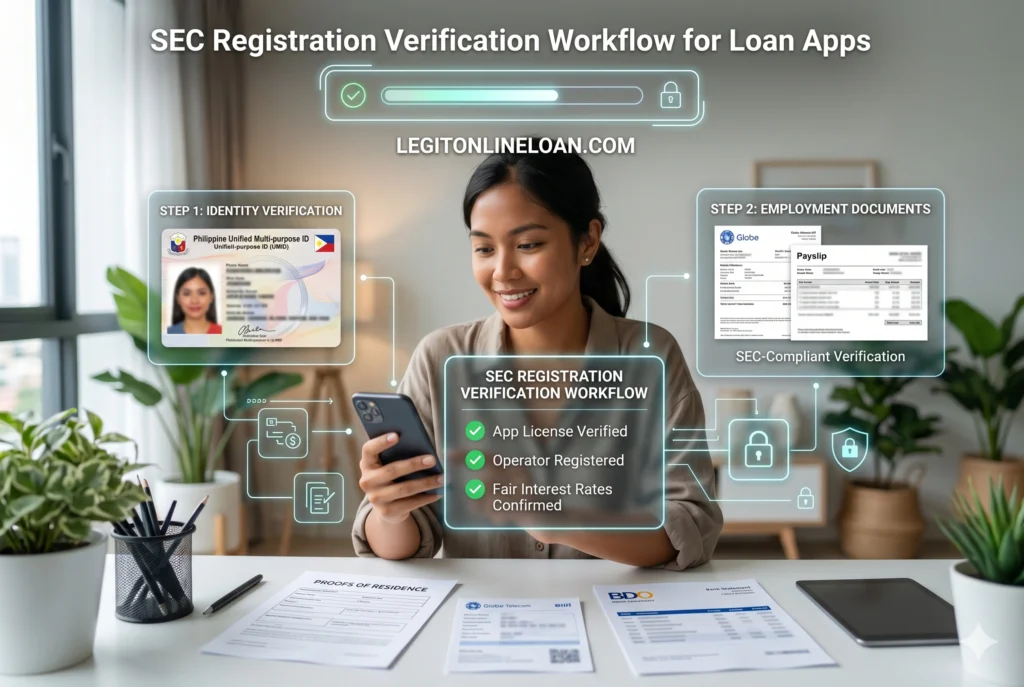
Step 1: Verify the Company Name Properly
One of the most common borrower mistakes is checking only the app name.
Many apps operate under a different corporate entity.
For example:
- The app branding may differ from the registered corporation
- Some apps use abbreviations
- Some fake apps imitate legitimate lenders using nearly identical names
Borrowers should verify:
- Full corporate name
- SEC registration records
- Lending authority status
- Official website consistency
- Customer support information
Official verification can be checked through SEC Philippines.
Step 2: Review App Permissions Carefully
A major borrower protection issue involves excessive app permissions.
Many borrowers ignore permission requests during installation.
A safe app may reasonably request:
- Camera access for ID verification
- Microphone access during video KYC
- SMS OTP verification
- Device information for fraud prevention
But risky apps often request:
- Full contact-list access
- Continuous location tracking
- Unnecessary media access
- Background permission abuse
This is why borrowers increasingly search for information about safe online loan app permissions before applying.
Modern fintech risk systems already use:
- Device integrity checks
- SIM consistency
- selfie verification
- identity matching
- behavioral fraud analysis
Legitimate lenders no longer need unrestricted access to personal contacts just to issue small loans.
Step 3: Evaluate Collection Behavior Signals
Legal lenders can still pursue collections.
But lawful collection differs greatly from harassment.
Borrowers should watch for:
- Threatening language
- Public humiliation tactics
- Mass messaging to unrelated contacts
- Fake legal threats
- Edited social media photos
- Repeated harassment calls
The Philippines previously saw strong regulatory attention toward abusive digital collection behavior.
This is why borrowers researching how collection practices affect borrowers should examine complaint patterns before applying.
Step 4: Check If the App Was Previously Removed
Some lending apps disappear from app stores due to:
- Regulatory investigations
- Privacy violations
- User complaints
- Policy violations
- Impersonation activity
Borrowers researching apps removed by SEC or Google Play are usually trying to avoid previously flagged operators.
App disappearance alone does not always confirm illegality, but repeated removals, rebranding, or cloned versions are major warning signals.
Common Trust Signals of Legitimate Lending Apps ✔️
Borrowers often focus only on approval speed.
But experienced borrowers usually evaluate operational consistency first.
Transparent Loan Information
A trustworthy lender usually explains:
- Interest computation
- Due dates
- Processing fees
- Penalties
- Repayment channels
- Loan duration
Suspicious apps often hide these details until after account creation.
Stable Digital Presence
Legitimate operators generally maintain:
- Official website
- Active customer support
- Updated app listings
- Consistent branding
- Clear privacy policies
Fake lenders frequently rotate branding names or use poorly translated interfaces.
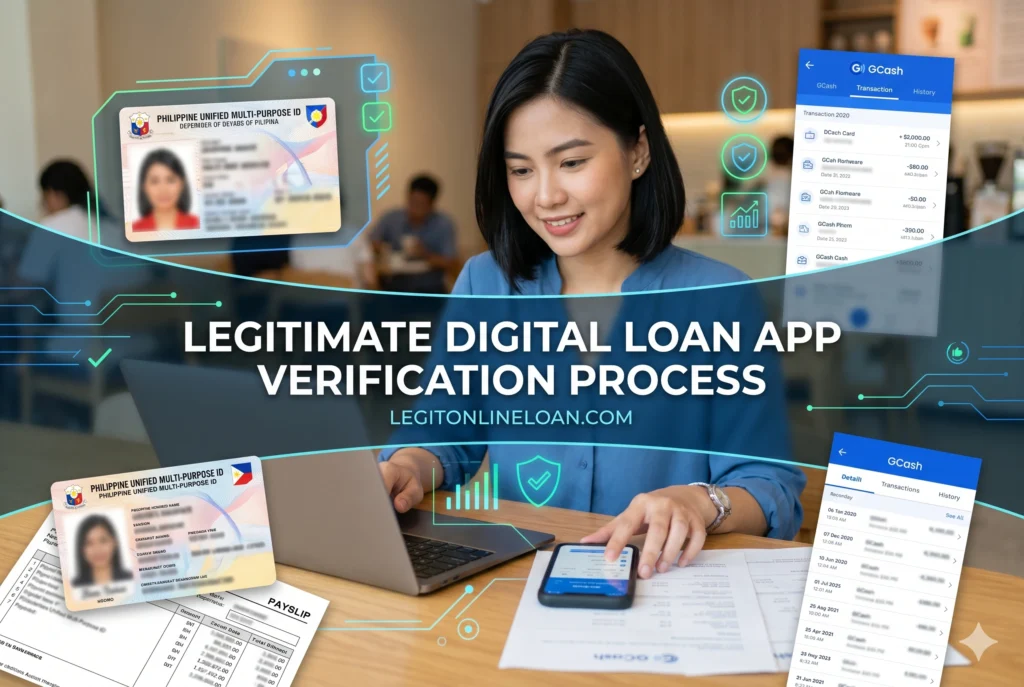
Professional KYC Workflow
Most regulated digital lenders now use structured onboarding flows involving:
- Government-issued ID capture
- Facial recognition
- Liveness checks
- OTP validation
- Income screening
- Risk scoring
Borrowers should not confuse strict verification with scams.
In fact, weak verification systems may indicate poor compliance.
Integration With Recognized Payment Systems
Legitimate apps often support:
- GCash
- Maya
- Bank transfer disbursement
- QR-enabled repayment
- OTC payment channels
The widespread use of Philippine e-wallet ecosystems also improved fraud monitoring and repayment traceability.
Why Legal Loan Apps Still Reject Borrowers ❌
Many first-time applicants assume rejection means the app is fake.
That is not necessarily true.
Borrowers frequently search why legal loan apps still reject borrowers after submitting complete documents.
In reality, legitimate lenders use layered risk assessment systems.
Employment Type Matters
Different income categories are evaluated differently:
| Borrower Type | Typical Evaluation Pattern |
|---|---|
| Salaried employee | Stable income verification |
| Freelancer | Irregular but acceptable income |
| Online seller | Cash flow analysis |
| Gig worker | Transaction consistency |
| Self-employed | Business proof review |
Some apps now evaluate alternative income behavior using:
- e-wallet transaction activity
- banking behavior
- repayment history
- device consistency
- repeated application patterns
Fraud Detection Is Much Stricter Today
Modern fintech lenders increasingly use:
- AI-assisted fraud scoring
- duplicate identity detection
- synthetic ID screening
- device fingerprint monitoring
- selfie mismatch detection
Applications may fail because:
- selfies are blurry
- IDs are cropped
- names mismatch
- SIM ownership differs
- suspicious device behavior is detected
These operational realities are rarely explained clearly on comparison blogs, but they significantly affect approval outcomes.
High Existing Debt Can Trigger Automatic Rejection
Some lenders review borrower credit behavior through the Credit Information Corporation ecosystem or related partner systems.
Multiple active loans within a short period may increase risk scoring.
This is one reason borrowers sometimes receive approvals from one app but rejections from another on the same day.
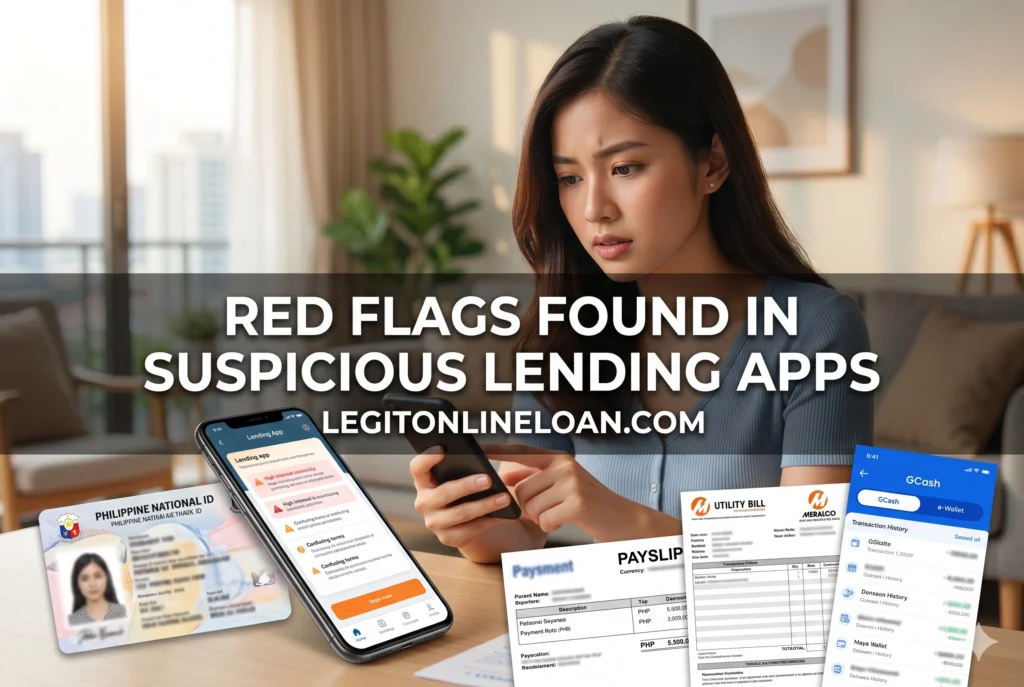
Warning Signs of Fake Loan Apps 🚨
Many borrowers only realize a lender is suspicious after repayment pressure begins.
Knowing the early indicators matters far more.
Aggressive SMS Marketing
Be cautious if you receive:
- random pre-approved loan messages
- suspicious links
- urgent “instant release” claims
- unrealistic loan amounts without verification
Fake lenders often rely heavily on mass SMS campaigns.
Unrealistic Approval Promises
No legitimate lender approves everyone instantly.
Even fast-release apps still conduct:
- identity validation
- fraud checks
- device analysis
- behavioral scoring
Apps promising guaranteed approval regardless of employment or repayment history deserve caution.
Excessive Upfront Fees
Legitimate lenders rarely require large upfront processing payments before disbursement.
Common scam behavior includes:
- “verification deposits”
- release activation fees
- insurance payments before funding
- wallet unlocking charges
These are major warning signs of fake loan apps.
Fake Reviews and Manipulated Ratings
App store manipulation became increasingly common.
Borrowers should examine review patterns carefully.
Suspicious indicators include:
- thousands of identical reviews
- repetitive wording
- generic praise
- sudden rating spikes
- poor review-response quality
Review authenticity matters more than raw star ratings.
Is SEC Registration Enough to Trust a Lender?
No.
SEC registration is only one part of the trust equation.
Borrowers should also evaluate:
- privacy behavior
- complaint patterns
- fee transparency
- repayment fairness
- collection professionalism
- app stability
- customer support quality
A legal lender can still receive borrower complaints.
For example:
- delayed customer support
- strict collection follow-up
- aggressive reminders
- approval inconsistency
- technical repayment issues
This is why borrowers should avoid blind trust based only on one compliance label.
The safest approach combines:
- SEC verification
- Privacy awareness
- Borrower review analysis
- Permission review
- Repayment clarity
- Collection reputation
Borrowers Concerned About Contact Access and Privacy
One of the largest fears among Filipino borrowers involves phone contacts.
This concern became widespread after reports of contact-list harassment emerged years ago.
What Legitimate Apps Usually Access
Some permissions may support:
- fraud prevention
- device validation
- account security
- identity verification
But excessive unrelated access creates risk.
Borrowers should carefully review:
- privacy policy wording
- app permission explanations
- data-sharing disclosures
The National Privacy Commission provides channels for complaints involving potential privacy abuse.
Why Privacy Policies Matter More Today
Current digital lending systems increasingly rely on:
- AI fraud detection
- behavioral analytics
- risk scoring
- geolocation consistency
- device trust systems
Because of this, responsible lenders are under increasing pressure to justify data collection practices.
Apps with vague or poorly translated privacy policies deserve caution.
What Happens If an Online Loan App Is Not Registered?
Borrowers dealing with unregistered lenders may face:
- weak consumer protections
- unclear accountability
- higher scam risk
- aggressive collections
- identity misuse exposure
Illegal operators may disappear quickly after collecting borrower information.
This is particularly dangerous when borrowers upload:
- IDs
- selfies
- address details
- payroll information
- banking screenshots
Borrowers Often Miss the Real Risk
The biggest danger is not always the loan itself.
Sometimes the larger risk involves:
- identity theft
- unauthorized data use
- repeated scam targeting
- financial account exposure
This is why verification should happen BEFORE application submission.
Quick Borrower Verification Checklist ✅
Before installing any online lending app in the Philippines, review the following:
Basic Legitimacy Checks
- Verify SEC registration
- Confirm lending authority
- Check official website consistency
- Review Google Play permissions
- Examine privacy policies
Borrower Protection Checks
- Search complaint discussions
- Evaluate collection reputation
- Avoid apps with mass harassment reports
- Review repayment transparency
Technical Safety Checks
- Avoid APK downloads from unknown sites
- Use official app stores only
- Enable phone security protections
- Avoid sharing OTPs
Financial Reality Checks
- Borrow only repayable amounts
- Understand due dates fully
- Avoid simultaneous multi-app borrowing
- Prepare repayment channels early
Frequently Asked Questions About SEC-Registered Loan Apps
How do I know if an online loan app is SEC registered?
Borrowers should verify the corporate entity through official SEC Philippines records instead of relying only on app store descriptions or advertisements. Always confirm the actual corporation behind the app.
Can a legal app still harass borrowers?
Yes. Registration does not automatically eliminate borrower complaints. However, regulated companies are more exposed to enforcement action and reputational consequences compared to illegal operators.
Where can borrowers verify lending companies?
Borrowers can check official records through SEC Philippines Official Website and review privacy-related concerns through National Privacy Commission Philippines.
Why do some apps disappear from Google Play?
Apps may be removed because of policy violations, privacy concerns, impersonation issues, or regulatory scrutiny. Some later reappear under different branding.
Do legal lenders always approve borrowers?
No. Legitimate lenders often apply stricter verification, fraud prevention, and repayment risk analysis than suspicious apps.
Conclusion
The Philippine online lending ecosystem continues evolving rapidly. Faster onboarding, AI-based fraud screening, e-wallet disbursement, and mobile-first verification systems made borrowing more convenient than ever — but also created opportunities for illegal operators and fake apps.
The safest borrowers are not necessarily the fastest applicants. They are the ones who pause first, verify properly, examine permissions carefully, and evaluate lender behavior beyond marketing promises.
A legit online loan app SEC registered offers a stronger starting point for borrower safety, but real trust also depends on transparent operations, responsible collection behavior, privacy protection, and realistic repayment expectations.
Before uploading IDs or submitting personal data, always verify the company behind the app. Responsible borrowing starts long before the loan gets approved.
Last Updated: May 29, 2026
| Online Loans | Amount |
| 🔰️ Online Loans US | $100 – $5,000 |
| 🔰️ Online Loans UK | $100 – $5,000 |
| 🔰️ Online Loans Pilipinas | ₱ 1000 – ₱ 25,000 |
| 🔰️ Vay Tiền Online VN | 1 triệu – 14 triệu VNĐ |
| 🔰️ Online Loans Sri Lanka | Rs 8000 – Rs 50,000 |
| 🔰️ Préstamos Online México | $ 1,000 – $ 150,000 |
| 🔰️ Préstamos Online en España | 50€ – 300€ |
| 🔰️ Pożyczki Online Polska | 500 PLN – 15000 PLN |
