
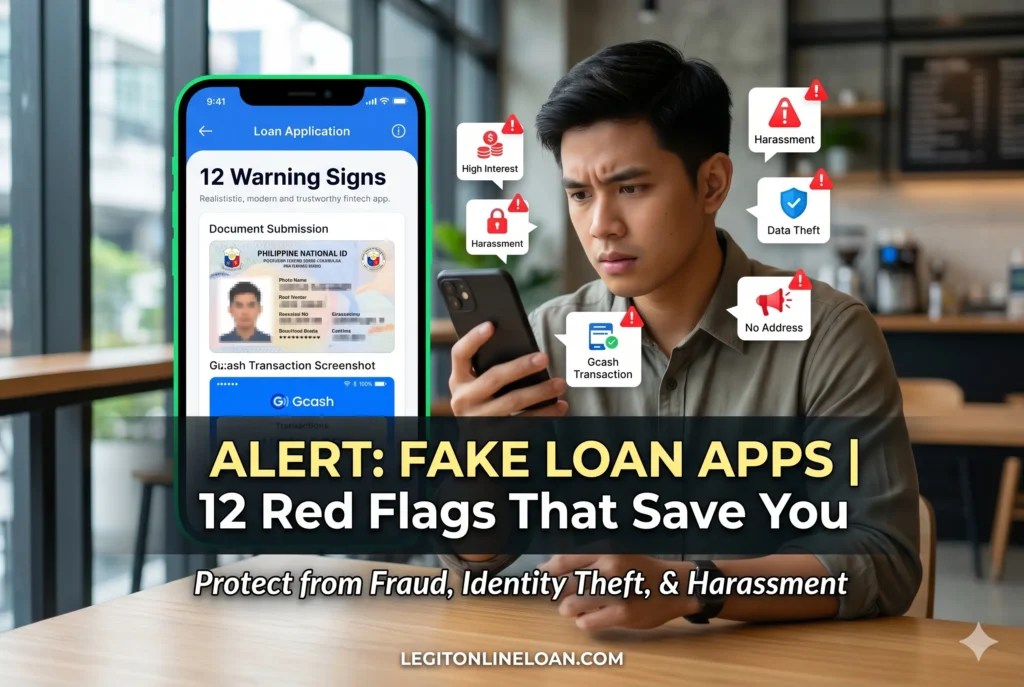
Online lending has become a normal part of financial life in the Philippines. With mobile-first applications, e-wallet disbursements, facial verification, and rapid approval systems, borrowers can access funds faster than ever before.
Unfortunately, scammers have evolved just as quickly.
Many fraudulent lending operations now imitate legitimate fintech apps, create professional-looking websites, buy fake reviews, operate through Facebook pages, Telegram accounts, SMS campaigns, and even distribute loan applications through APK download sites. Some are not actually lenders at all—they are data collection operations designed to harvest personal information, steal identities, or pressure vulnerable borrowers into paying fees for loans that never exist.
For borrowers facing urgent financial pressure, recognizing scam behavior is often more important than checking a registration number alone.
Summary
The most important fake online loan app warning signs include requests for upfront fees, pressure to act immediately, excessive app permissions, threats before loan approval, unofficial APK downloads, suspicious Facebook or Telegram loan agents, and requests for sensitive information beyond normal KYC requirements. Legitimate lenders typically verify identity, assess repayment capacity, and disclose fees transparently before disbursement. Borrowers who learn behavioral scam patterns, permission risks, and manipulation tactics can significantly reduce the risk of identity theft, financial loss, contact harvesting, and online harassment.
Why Borrowers Often Miss the Warning Signs
Many scam victims are not careless.
They are often dealing with:
- Emergency expenses
- Medical bills
- Delayed salaries
- Family obligations
- Existing debt stress
Fraudulent lenders understand this emotional state.
Instead of competing on loan quality, they focus on psychological pressure.
Their objective is usually one of three things:
- Collect money through fake fees
- Collect personal information
- Gain access to contacts and devices
The most dangerous scams succeed because they appear helpful during moments of financial urgency.
Quick Checklist: Fake Online Loan App Warning Signs
If you notice multiple signs below, stop the application immediately:
| Red Flag | Risk Level |
|---|---|
| Requires payment before approval | Very High |
| Only available through APK download | High |
| Asks for access to contacts, SMS, and photos without explanation | Very High |
| Uses Telegram agents instead of official channels | High |
| Threatens collection before loan release | Very High |
| No transparent loan terms | High |
| Uses fake customer service profiles | High |
| Promises guaranteed approval regardless of income | Very High |
| Pressures borrowers to act immediately | High |
| Sends suspicious links through SMS | Very High |
| Uses manipulated testimonials | Medium-High |
| Requests passwords or OTP codes | Critical |
🚩 Red Flag #1: Upfront Fee Scams
Among all scam patterns reported by borrowers, upfront fee scams remain one of the most common.
A fake lender may claim you must pay:
- Verification fee
- Processing fee
- Insurance fee
- Activation fee
- Security deposit
- Release fee
before receiving your loan.
How Legitimate Lending Usually Works
Most regulated digital lenders disclose fees within the loan agreement and deduct charges according to their published terms.
A legitimate lender does not typically require random payments through:
- Personal bank accounts
- E-wallet transfers to individuals
- Social media accounts
- Messaging apps
Common Manipulation Script
A borrower receives approval notification.
Minutes later, customer service claims:
“Your loan is approved, but you must first pay ₱1,500 for verification.”
After payment:
- Another fee appears
- Release is delayed
- Customer service disappears
The loan never arrives.
🚩 Red Flag #2: The App Exists Only as an APK Download
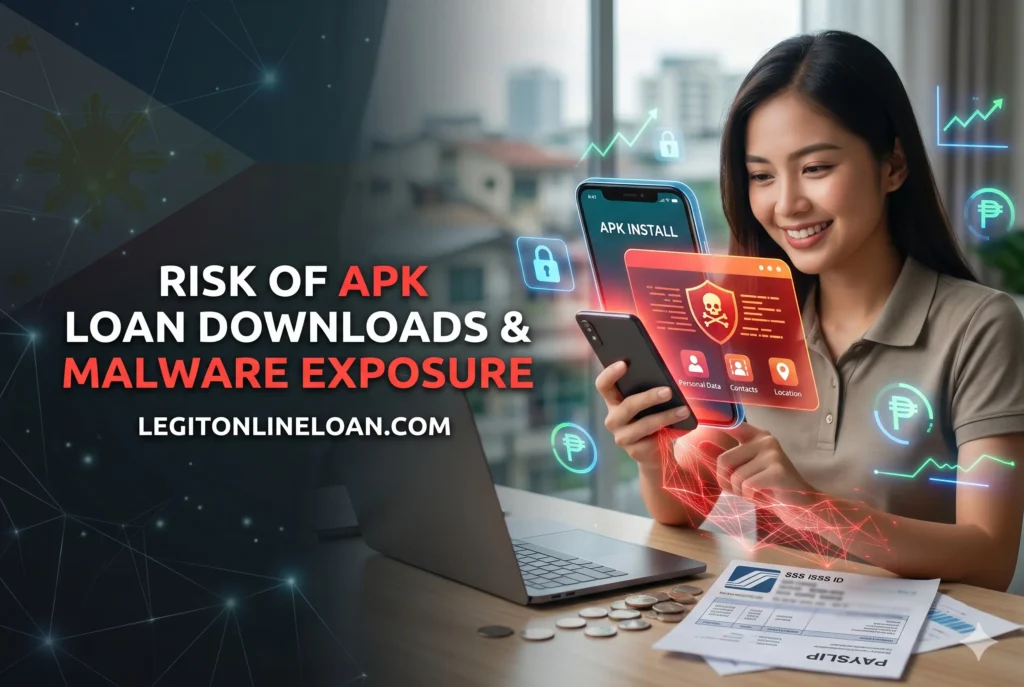
Many fraudulent lenders avoid official app stores.
Instead, users are told to install software from APK download sites.
Why This Matters
Official app stores perform security reviews.
Although not perfect, they provide:
- Malware screening
- Policy enforcement
- Developer accountability
- User review visibility
APK files from unknown sources may contain:
- Spyware
- Contact harvesting tools
- Credential theft systems
- Hidden tracking software
Are APK Loans Safe?
Not necessarily.
An APK file is simply an installation package.
Its safety depends entirely on who created it and what permissions it requests.
When a lender requires installation outside trusted distribution channels, borrowers should proceed with extreme caution.
🚩 Red Flag #3: Excessive Permission Requests
One of the strongest behavioral indicators of a problematic lending app is permission abuse.
Permissions That May Be Reasonable
Legitimate lenders may request:
- Camera access for ID verification
- Location access for fraud prevention
- Storage access for document uploads
Permissions That Should Raise Questions
Borrowers should carefully review safe app permissions before applying and understand why each permission is needed.
Warning signs include requests for:
- Full contact list access
- SMS reading permissions
- Photo gallery access unrelated to verification
- Call log access
- Microphone access without explanation
Why Contact Harvesting Happens
Some predatory operators use contacts as leverage.
Instead of assessing repayment risk through standard underwriting, they collect phonebook data that can later be used for:
- Harassment
- Public shaming
- Collection intimidation
- Social pressure campaigns
🚩 Red Flag #4: Threats Before Loan Approval
A legitimate lender evaluates risk before approval.
Scammers often reverse the process.
Some borrowers report receiving:
- Collection warnings
- Legal threats
- Penalty notices
before any funds have been disbursed.
This is not normal lending behavior.
How Real Verification Usually Works
Modern Philippine fintech onboarding commonly includes:
- Government ID submission
- Selfie verification
- Facial matching
- Device fingerprinting
- Mobile number verification
- Income assessment
Threats are not part of a standard approval workflow.
What To Do
If a lender threatens:
- Arrest
- Public exposure
- Social media posting
- Employer notification
before disbursement, discontinue communication immediately.
🚩 Red Flag #5: Facebook Lending Pages Acting Like Financial Institutions
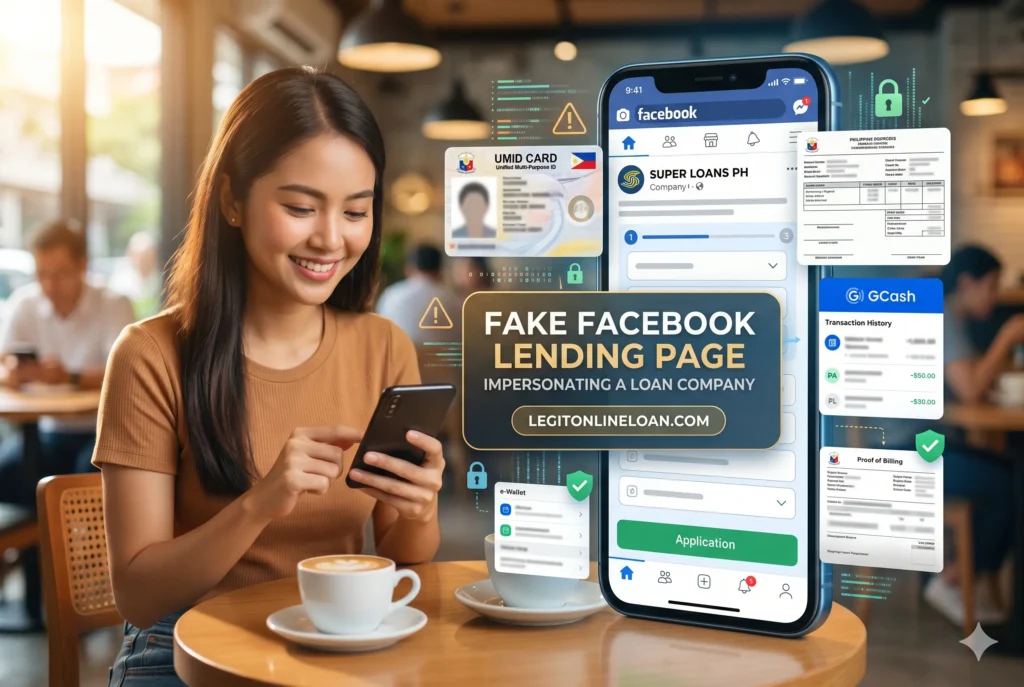
Facebook lending pages are increasingly used by fraudulent operators.
Many display:
- Stock photos
- Fake approvals
- Edited screenshots
- Manufactured success stories
Behavioral Clues
Watch for pages that:
- Have no corporate identity
- Disable comments
- Delete complaints
- Change names frequently
- Communicate only through private messages
Fake Customer Service Tactics
Fraudsters often create multiple customer service accounts.
When one account receives complaints, another appears.
This creates the illusion of a larger organization.
🚩 Red Flag #6: Telegram Loan Agents Promising Guaranteed Approval
Telegram loan agents frequently market:
- Instant approval
- No verification
- No credit checks
- Guaranteed release
These claims should trigger immediate skepticism.
Why Legitimate Lenders Verify Borrowers
Responsible lenders evaluate:
- Ability to repay
- Identity authenticity
- Fraud indicators
- Account ownership
No serious lending operation can eliminate verification entirely.
Common Telegram Scam Pattern
- Borrower submits details.
- Agent claims approval.
- Fee request appears.
- Additional fee follows.
- Communication stops.
🚩 Red Flag #7: Deepfake Testimonials and Fabricated Reviews
Technology has made fraud more convincing.
Some fake lenders now use:
- AI-generated faces
- Deepfake videos
- Synthetic voices
- Edited review screenshots
Signs a Testimonial May Be Manipulated
Look for:
- Generic praise
- No specific loan details
- Repeated language patterns
- Artificial-looking profile photos
- Identical comments across platforms
A large volume of perfect reviews is often less trustworthy than a realistic mix of positive and negative feedback.
🚩 Red Flag #8: Phishing Links Sent Through SMS
SMS lenders often distribute links claiming:
- Pre-approved loan
- Emergency cash offer
- Salary advance
- Instant funding
Many links redirect users to phishing pages.
What Phishing Pages Try to Capture
They may request:
- Login credentials
- Banking information
- E-wallet credentials
- One-time passwords
- Personal identification details
Never provide OTP codes to anyone.
Legitimate organizations do not need your OTP to process an application.
The Psychology Behind Urgency Manipulation
Fraudulent lenders rarely rely on product quality.
They rely on emotional pressure.
Common Pressure Statements
- “Offer expires in 15 minutes.”
- “Pay now to secure approval.”
- “Limited release slots available.”
- “Your application will be cancelled.”
Why This Works
Urgency reduces analytical thinking.
Borrowers stop evaluating:
- Fees
- Permissions
- Policies
- Privacy risks
and focus entirely on obtaining funds.
When urgency appears before proper verification, caution is warranted.
Borrower Situation: Asked to Pay a “Verification Fee”
A borrower applies through a social media advertisement.
The process seems professional.
A representative confirms approval and requests a verification payment.
At this stage, many applicants assume the loan is guaranteed.
The safer response is to pause and independently validate the lender.
Review official disclosures, communication channels, and company information before sending money.
Borrower Situation: Social Media Collection Threats
Some borrowers report receiving messages stating that photos, contacts, or personal details will be posted online.
These tactics are intended to create fear.
Legitimate debt collection practices are subject to legal and privacy expectations. Public humiliation, intimidation campaigns, and unauthorized disclosure of personal information are significant warning signs.
Borrowers facing these situations should document communications and seek assistance from appropriate authorities where necessary.
How Legitimate Digital Lending Verification Usually Works
Identity Verification
Modern onboarding commonly includes:
- Government-issued ID
- Selfie capture
- Facial recognition checks
- Mobile verification
Risk Assessment
Lenders may evaluate:
- Employment status
- Self-employment income
- Freelance earnings
- Gig-economy cash flows
- Bank transaction patterns
- E-wallet activity
The purpose is to assess repayment capacity—not to collect unnecessary personal information.
Transparency Requirements
Legitimate providers generally disclose:
- Interest rates
- Fees
- Repayment schedules
- Late-payment consequences
- Privacy policies
Missing disclosures should raise concern.
Smart Verification Habits Before Applying
Before submitting personal information:
Step 1: Verify Corporate Information
Use official channels to verify SEC registered lenders and review publicly available company details.
Step 2: Review Permissions
Evaluate requested device permissions carefully.
Step 3: Examine Communication Quality
Professional lenders typically maintain:
- Consistent branding
- Formal disclosures
- Structured support channels
Step 4: Review Privacy Practices
Check whether data collection appears proportional to the lending process.
Step 5: Compare Alternatives
Research multiple legit online lending apps Philippines borrowers commonly use instead of rushing into the first available offer.
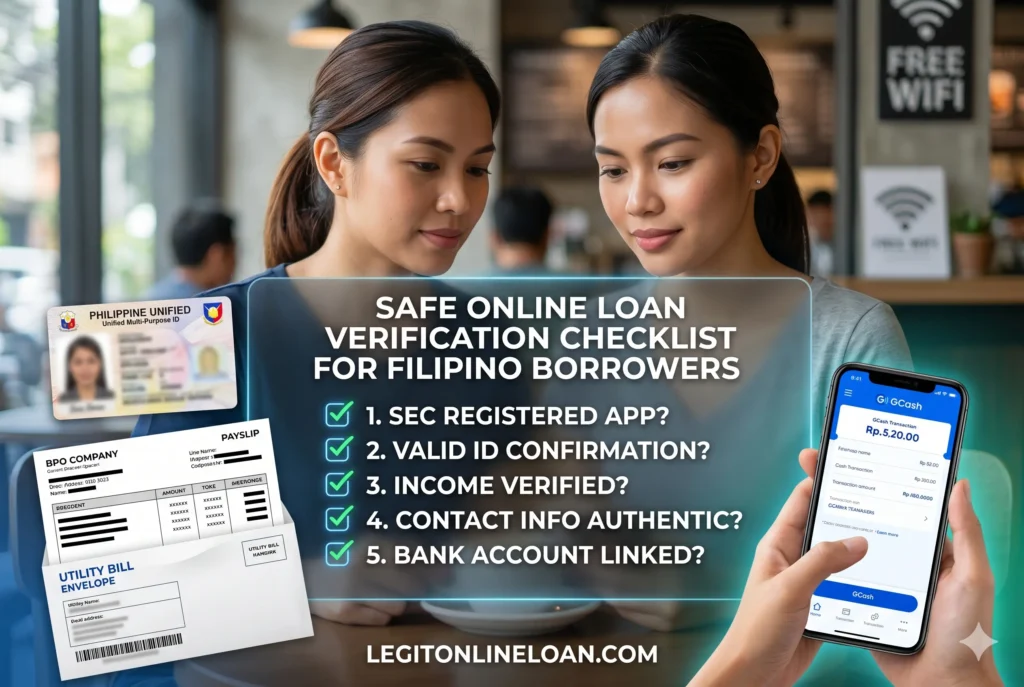
Fraud Detection Framework: The 5-Question Test
Before sharing information, ask:
- Am I being asked to pay before receiving funds?
- Does the lender explain every permission request?
- Are threats appearing before approval or release?
- Is communication happening only through unofficial channels?
- Would I still trust this lender if urgency disappeared?
If several answers raise concern, stop the application process and investigate further.
Frequently Asked Questions
Why do fake lenders ask for fees first?
Because collecting upfront payments is often the scam itself. Once money is transferred, fraudsters may invent additional requirements or disappear entirely.
Can fake loan apps steal contacts?
Yes. Some applications request access to contact lists and other device data. Excessive permissions can enable contact harvesting and other privacy risks.
Are APK loans safe?
Not automatically. APK files can be legitimate or malicious. Borrowers should be cautious when lenders require installation from unofficial sources.
Can a lender threaten me before approving a loan?
Threats before approval or disbursement are highly abnormal. Legitimate lenders focus on verification and risk assessment, not intimidation.
What should I do if I already shared personal information?
Change passwords where appropriate, monitor financial accounts, secure devices, and document suspicious communications. Seek assistance from relevant authorities if identity theft is suspected.
Conclusion
The most dangerous online loan scams rarely identify themselves as scams.
They present themselves as helpful lenders, approval specialists, customer service representatives, or financial advisers. What separates them from legitimate lending operations is not merely registration status—it is behavior.
Requests for upfront fees, excessive permissions, phishing links, fake customer service accounts, Telegram agents, pressure tactics, and social media threats are all signals that deserve careful attention.
When financial pressure is high, slowing down may feel difficult. Yet taking a few extra minutes to evaluate permissions, review disclosures, compare providers, and verify legitimacy can prevent financial loss, privacy violations, and long-term identity theft problems.
Responsible borrowing starts before an application is submitted. The safest borrowers are not always the fastest applicants—they are the ones who recognize risk before it becomes a problem.
Last Updated: May 30, 2026
| Online Loans | Amount |
| 🔰️ Online Loans US | $100 – $5,000 |
| 🔰️ Online Loans UK | $100 – $5,000 |
| 🔰️ Online Loans Pilipinas | ₱ 1000 – ₱ 25,000 |
| 🔰️ Vay Tiền Online VN | 1 triệu – 14 triệu VNĐ |
| 🔰️ Online Loans Sri Lanka | Rs 8000 – Rs 50,000 |
| 🔰️ Préstamos Online México | $ 1,000 – $ 150,000 |
| 🔰️ Préstamos Online en España | 50€ – 300€ |
| 🔰️ Pożyczki Online Polska | 500 PLN – 15000 PLN |
