
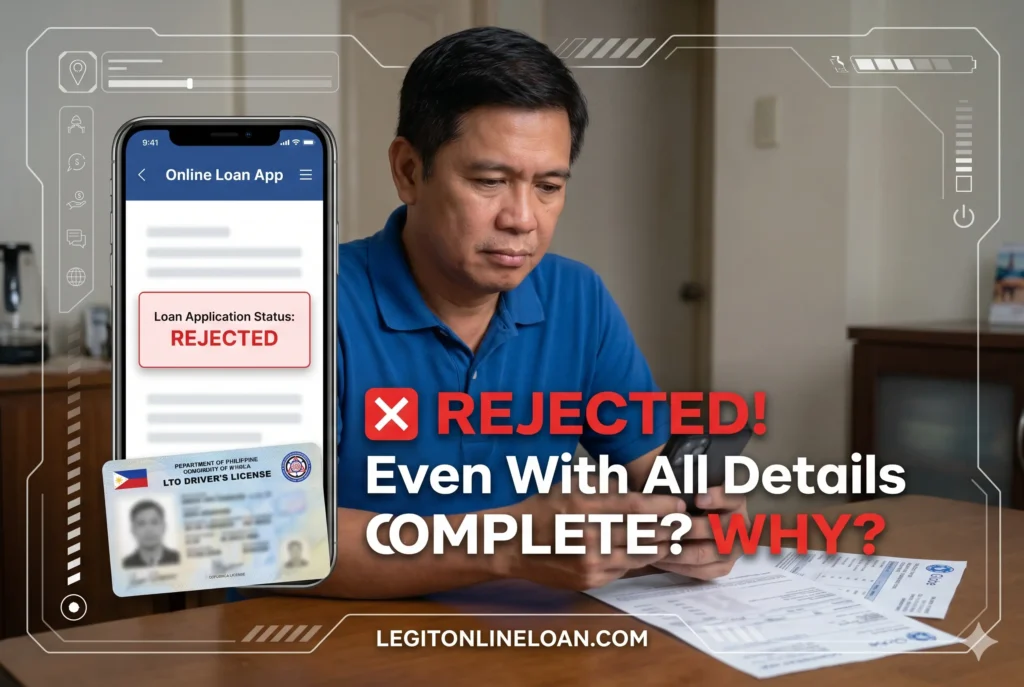
Many borrowers feel confused when a legitimate online loan application is rejected despite submitting valid IDs, complete personal information, and seemingly meeting the advertised requirements. The assumption is often that the lender made a mistake or that approval should be automatic once verification is completed.
In reality, regulated digital lenders use far more than basic identity verification. Modern lending platforms evaluate behavioral signals, fraud indicators, device intelligence, repayment probability, identity consistency, and risk patterns that are invisible to most applicants. A rejection does not always mean your documents were invalid. It often means the lender’s risk systems detected patterns that increased the probability of fraud, default, identity manipulation, or account misuse.
Summary
A legit online loan app rejected outcome is often caused by risk analytics rather than missing documents. Regulated lenders evaluate identity consistency, device risk systems, fraud scoring tools, telecom verification, e-wallet verification, alternative credit scoring systems, application behavior, and repayment probability. Factors such as multiple SIM cards, rooted phones, frequent application switching, mismatched information, suspicious digital footprints, or repeated loan applications can trigger automated rejection decisions. Borrowers can improve approval readiness by correcting profile inconsistencies, maintaining stable contact information, using secure devices, and avoiding behavior patterns commonly associated with fraud.
Why Complete Information Does Not Guarantee Approval
Traditional borrowers often assume that approval depends on three simple factors:
- Complete application form
- Valid government ID
- Proof of income
Modern Philippine digital lending is far more sophisticated.
Many regulated lenders now operate through automated underwriting systems that process hundreds of risk variables simultaneously. These systems evaluate not only who you are but also whether your behavior resembles that of previously successful borrowers or known fraud patterns.
A borrower may submit accurate information yet still be rejected because the risk engine identifies concerns elsewhere.
Examples include:
- Device abnormalities
- Identity inconsistencies
- Unusual application patterns
- High fraud-risk indicators
- Weak repayment probability signals
This distinction explains why many applicants receive rejection notices despite successfully completing Know Your Customer (KYC) verification.
🛡️ The Hidden Layers of Digital Lending Risk Assessment
Identity Verification Is Only the First Gate
KYC verification confirms that an applicant appears to be a real person.
However, lenders must also determine:
- Is the applicant truly controlling the identity?
- Is the information consistent across databases?
- Is there evidence of identity manipulation?
- Does the application resemble known fraud patterns?
This is where synthetic identity detection becomes important.
Synthetic identities are combinations of real and fabricated information designed to appear legitimate. Fraud systems continuously look for subtle inconsistencies that humans may overlook.
A valid ID alone cannot eliminate this risk.
Repayment Probability Often Matters More Than Income
Many borrowers focus exclusively on income.
Lenders focus on repayment.
A freelance worker earning ₱50,000 monthly may sometimes present less predictable repayment patterns than an employee earning ₱25,000 with stable payroll records.
Modern underwriting models frequently evaluate:
- Income stability
- Employment consistency
- Cash-flow patterns
- Historical repayment behavior
- Financial reliability indicators
This is one reason why some applicants with relatively high earnings still experience rejection.
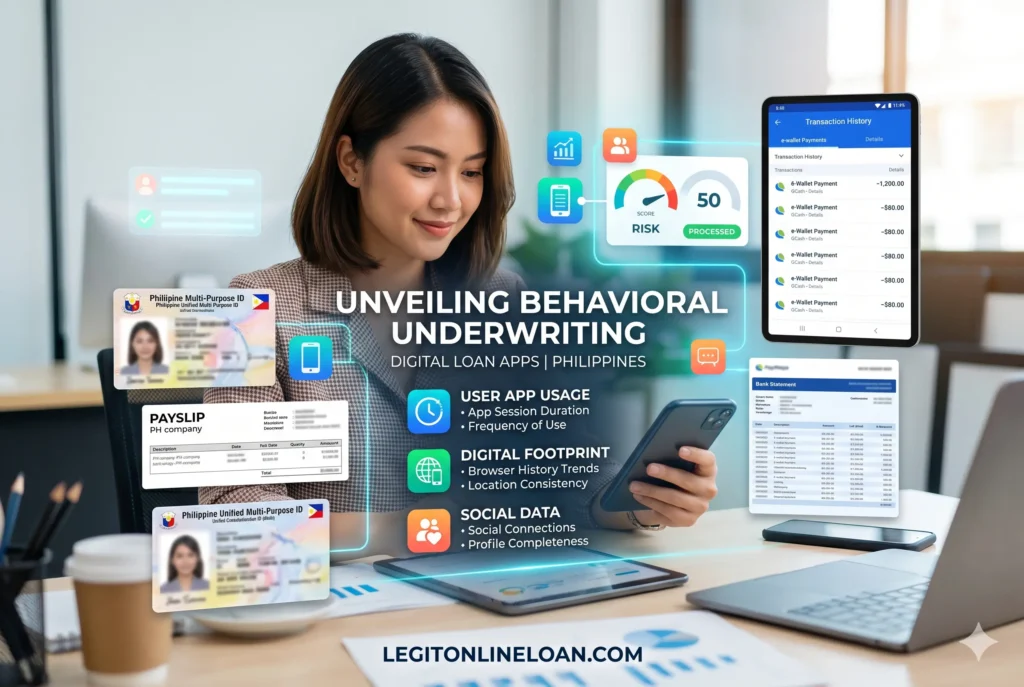
How Device Risk Systems Influence Approval Decisions
One of the least discussed approval factors is device intelligence.
What Device Risk Systems Actually Examine
Most legitimate lenders use device risk systems to identify suspicious activity.
These systems may analyze:
- Device age
- Operating system integrity
- Emulator usage
- Rooted device indicators
- Jailbroken device indicators
- App installation patterns
- Device fingerprint consistency
A rooted Android device can create serious concerns because it allows modification of security controls.
From a lender’s perspective, rooted devices increase fraud exposure.
The borrower may have rooted the device for personal customization, but the system often cannot distinguish harmless modification from malicious manipulation.
Multiple Accounts From the Same Device
Fraud scoring tools frequently detect situations where multiple loan applications appear linked to a single device.
This may occur when:
- Family members share one phone
- Previous users owned the device
- Multiple accounts exist on the same handset
While legitimate explanations exist, the system may still assign additional risk points.
Once risk thresholds are exceeded, automatic rejection becomes more likely.
The Growing Importance of Digital Footprint Risk
A major shift in fintech underwriting is the use of digital footprint risk analysis.
What Is Digital Footprint Risk?
Digital footprint risk refers to patterns generated through normal digital activity.
Examples include:
- Device stability
- Phone number history
- Account longevity
- Verification consistency
- Application behavior
The goal is not to invade privacy.
The goal is to distinguish genuine borrowers from organized fraud networks.
A borrower with:
- One long-term phone number
- Stable device usage
- Consistent identity information
often appears less risky than someone who frequently changes phones, SIM cards, and contact details.
Telecom Verification Signals
Telecom verification has become increasingly important in mobile-first lending.
Lenders may evaluate:
- Phone number validity
- SIM tenure
- OTP verification success
- Number consistency across applications
Frequent SIM card switching can sometimes create concerns.
This does not automatically indicate fraud, but fraud networks often use disposable numbers.
As a result, the behavior receives additional scrutiny.
Why Identity Mismatch Causes Immediate Rejection
Identity mismatch remains one of the most common rejection triggers.
Small Inconsistencies Can Create Large Problems
Borrowers frequently underestimate how sensitive automated systems have become.
Examples include:
- Different name spellings
- Mismatched birth dates
- Different addresses
- Incorrect middle names
- Conflicting employment details
A human reviewer might overlook minor discrepancies.
Automated verification systems often do not.
When multiple mismatches appear simultaneously, confidence scores decline rapidly.
E-Wallet Verification and Identity Consistency
Many Philippine lenders now integrate e-wallet verification into onboarding processes.
Information may be compared against:
- E-wallet accounts
- Submitted documents
- Selfie verification
- Contact information
When inconsistencies appear across these sources, risk scores may increase significantly.
This explains why some applicants pass ID verification but still receive a rejection notification later in the process.
Why Repeat Applications Can Hurt Your Chances
Can Too Many Applications Hurt Approval?
Yes.
Repeated applications can affect approval outcomes.
The reason is not punishment.
The reason is risk modeling.
When an applicant submits numerous applications within a short period, lenders may interpret the behavior as evidence of:
- Financial distress
- Loan stacking attempts
- Fraud testing
- Identity misuse
Many alternative credit scoring systems monitor these patterns.
Submitting applications to ten lenders in two days can produce a very different risk profile than applying carefully to one or two lenders.
Frequent Application Switching Behavior
One pattern commonly observed across lending platforms involves borrowers repeatedly abandoning applications and restarting elsewhere.
Risk systems sometimes interpret this as:
- Verification avoidance
- Identity inconsistency
- High urgency borrowing
- Fraud experimentation
The behavior does not automatically cause rejection.
However, it may contribute to cumulative risk scoring.
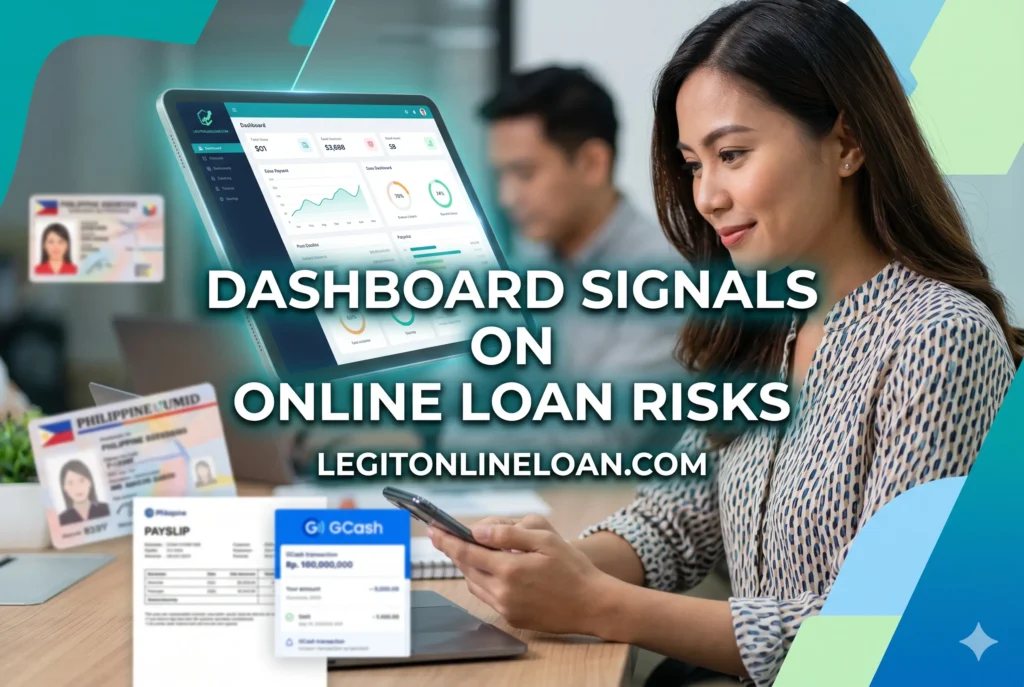
Approval Myths That Cause Borrower Confusion
Myth #1: Passing KYC Means Approval Is Guaranteed
KYC verification only confirms identity-related requirements.
Approval requires separate risk assessment.
Many applicants confuse these two stages.
Myth #2: Higher Income Guarantees Approval
Income is only one variable.
Repayment predictability often matters more.
Myth #3: All Rejections Are Manual
Most modern lenders rely heavily on automated underwriting.
Many decisions occur within seconds without human intervention.
Myth #4: Reapplying Immediately Solves the Problem
If the underlying risk indicators remain unchanged, immediate reapplication often produces the same result.
Correcting the root issue is usually more effective.
What Legitimate Lenders Look For Beyond Documents
Consistency Across Every Verification Layer
Strong applications typically demonstrate consistency between:
- Government ID
- Selfie verification
- Mobile number
- Employment details
- E-wallet account
- Residential information
Consistency reduces uncertainty.
Reduced uncertainty lowers perceived risk.
Stable Borrower Behavior
Risk engines generally favor applicants who demonstrate:
- Long-term contact information
- Predictable financial patterns
- Realistic borrowing amounts
- Complete disclosures
- Stable digital identities
These indicators help support favorable repayment probability assessments.
Why Was I Rejected After Uploading Valid IDs?
The most common explanation is that identity verification succeeded while risk evaluation failed.
The lender may have identified:
- Device-related concerns
- Behavioral risk patterns
- Repayment uncertainty
- Information inconsistencies
- Fraud indicators
Think of the process as two separate decisions:
- Are you a real person?
- Are you a low-risk borrower?
Passing the first question does not automatically satisfy the second.
Does Phone Behavior Matter?
Yes.
Phone behavior increasingly influences automated underwriting decisions.
Examples include:
- Frequent SIM replacements
- Repeated OTP failures
- Device modifications
- Multiple application attempts
- Suspicious account activity
Legitimate lenders use these indicators because fraud operations frequently display similar behaviors.
This is also why discussions about loan app permissions and identity checks are important. Many permissions requested by regulated lenders support fraud prevention, identity verification, and account security rather than simple marketing purposes.
Real Borrower Behaviors That Commonly Trigger Risk Scores
Borrowers Using Multiple SIM Cards
Multiple SIM cards are common in the Philippines.
However, rapidly changing numbers can reduce identity continuity.
Maintaining a primary long-term number often strengthens verification confidence.
Applicants Using Rooted Devices
Rooted devices can trigger elevated fraud-risk assessments.
Whenever possible, submit applications from standard, secure operating systems.
Constant Application Hopping
Applying to many lenders within a short period may resemble loan stacking behavior.
Spacing applications and correcting profile issues first is usually a better strategy.
Gig-Economy and Freelance Workers
Freelancers are not automatically disadvantaged.
However, providing consistent income evidence becomes particularly important.
Examples include:
- Bank transaction records
- E-wallet histories
- Client payment records
- Platform earnings reports
These documents help establish repayment reliability.

Practical Fixes Before Reapplying
If a legitimate lender rejected your application, focus on profile quality rather than speed.
Review Identity Consistency
Verify that:
- Names match exactly
- Addresses are accurate
- Dates are consistent
- Contact information is current
Stabilize Your Digital Profile
Avoid:
- Frequent SIM changes
- Multiple application bursts
- Device switching during applications
Improve Verification Readiness
Prepare:
- Updated IDs
- Accurate employment information
- Recent proof of income
- Active e-wallet accounts
Use Legitimate Lending Platforms
Borrowers should prioritize safe SEC registered loan apps that follow regulatory expectations, transparent disclosures, and responsible verification practices.
Working with regulated lenders reduces exposure to questionable approval tactics and unlawful lending behavior.
Understand What Happens After Rejection
A rejection is not a permanent label.
Many lenders periodically refresh risk models and verification assessments.
After correcting identified issues, future applications may receive a different outcome.
Borrowers should also learn about legal collection behavior after nonpayment so they can distinguish legitimate lender practices from intimidation tactics sometimes associated with illegal operators.
Frequently Asked Questions
Why do legitimate loan apps reject applications with complete requirements?
Because approval decisions extend beyond document collection. Risk engines evaluate repayment probability, fraud indicators, behavioral patterns, device integrity, and identity consistency.
How long should I wait before reapplying?
There is no universal timeline. It is generally more effective to correct profile issues first rather than immediately submitting another application.
Can changing phones affect approval?
Potentially. Frequent device changes can reduce identity continuity and may trigger additional verification checks.
Do alternative credit scoring systems replace traditional credit checks?
Not entirely. Many lenders combine alternative data with traditional risk evaluation methods when available.
Is rejection proof that I have bad credit?
No. A rejection can result from identity mismatches, device risks, fraud indicators, incomplete verification confidence, or other underwriting factors unrelated to traditional credit history.
Conclusion
Being rejected by a legitimate online loan app can feel frustrating, especially when every document appears complete. Yet modern digital lending decisions are driven by far more than IDs and income proofs. Regulated lenders increasingly rely on device risk systems, fraud scoring tools, telecom verification, e-wallet verification, alternative credit scoring systems, and behavioral analytics to assess repayment probability and detect potential fraud.
Rather than repeatedly submitting applications, borrowers should focus on improving profile consistency, maintaining stable contact information, correcting identity mismatches, and using secure devices. A rejection is often a signal that the system identified risk factors—not necessarily that you are ineligible forever. Careful preparation, accurate information, and responsible borrowing habits can significantly improve approval readiness in future applications.
Last Updated: May 31, 2026
| Online Loans | Amount |
| 🔰️ Online Loans US | $100 – $5,000 |
| 🔰️ Online Loans UK | $100 – $5,000 |
| 🔰️ Online Loans Pilipinas | ₱ 1000 – ₱ 25,000 |
| 🔰️ Vay Tiền Online VN | 1 triệu – 14 triệu VNĐ |
| 🔰️ Online Loans Sri Lanka | Rs 8000 – Rs 50,000 |
| 🔰️ Préstamos Online México | $ 1,000 – $ 150,000 |
| 🔰️ Préstamos Online en España | 50€ – 300€ |
| 🔰️ Pożyczki Online Polska | 500 PLN – 15000 PLN |
