
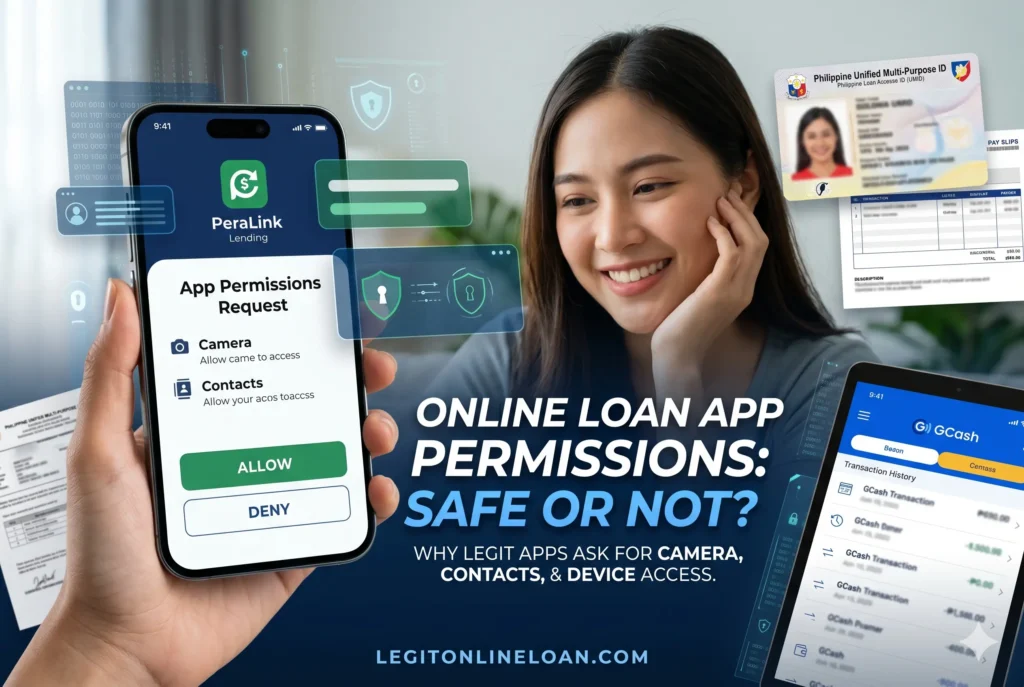
Why Some Loan Apps Request Camera, Contacts, and Device Permissions — and When You Should Worry
Applying for a digital loan in the Philippines often creates an uncomfortable moment: the app asks for camera access, contacts permission, location sharing, or access to certain device information. Many borrowers immediately wonder whether the app is legitimate or preparing to misuse their personal data.
The truth is more nuanced. Some permissions are essential for identity verification, fraud prevention, and regulatory compliance. Others may be unnecessary or excessive depending on the lender’s business model. The key is knowing how to distinguish legitimate verification behavior from privacy-risk signals.
For borrowers evaluating a lending app, the question is not simply whether permissions are requested. The real question is whether the permissions are proportionate, disclosed transparently, and aligned with a legitimate lending purpose.
Summary
When evaluating whether online loan app permissions are safe or not, borrowers should focus on why the permission is requested and how it supports identity verification, fraud prevention, and regulatory compliance. Legitimate lending apps commonly request camera access for selfie verification, location data for risk assessment, and limited device information for fraud detection. However, excessive permissions, undisclosed contact harvesting, background data collection, or unrelated device access can indicate elevated privacy risks. In the Philippines, digital lenders are expected to follow privacy principles promoted by the National Privacy Commission and comply with responsible data-processing practices. Understanding permission requests helps borrowers avoid unnecessary fear while recognizing genuine warning signs.
📱 The Reality of Modern Digital Lending Verification
The Philippine lending market has evolved rapidly over the last several years. Most reputable lenders now operate through fully digital onboarding systems.
Instead of meeting applicants in person, lenders rely on technology-driven verification tools, including:
- Facial verification systems
- OCR identity tools
- OTP verification
- Device fingerprinting
- Geolocation systems
- Digital document authentication
- AI-assisted fraud detection
Without these technologies, digital lenders would struggle to verify identity and prevent impersonation.
This explains why permission requests often appear during application.
A borrower who previously applied for loans only through bank branches may find these requests intrusive. However, many of them exist because the lender must verify that:
- The applicant is real
- The applicant is physically present during application
- The ID belongs to the applicant
- The application is not automated
- The device has not been linked to fraud
These checks are closely connected to KYC compliance requirements commonly used across regulated financial services.
What Is KYC Compliance and Why Does It Matter?
Know Your Customer (KYC) procedures are identity verification processes used throughout the financial sector.
Banks, e-wallets, lending companies, and payment providers use KYC controls to reduce:
- Identity theft
- Synthetic identity fraud
- Money laundering risks
- Account takeovers
- Fake applications
When a loan app asks for verification permissions, many requests support KYC workflows rather than data collection for marketing purposes.
For example:
| Permission | Common Legitimate Purpose |
|---|---|
| Camera | Selfie verification and ID capture |
| Location | Fraud checks and risk controls |
| Device Information | Device fingerprinting |
| SMS Verification | OTP authentication |
| Storage Access | Uploading required documents |
| Contacts | Emergency contact validation (when disclosed) |
The presence of a permission alone does not determine whether an app is trustworthy.
The context matters.
🔍 Permission-by-Permission Trust Analysis
Why Do Loan Apps Need Camera Access?
Camera access is one of the most common permission requests.
Most legitimate lenders use camera functionality for:
- Government ID capture
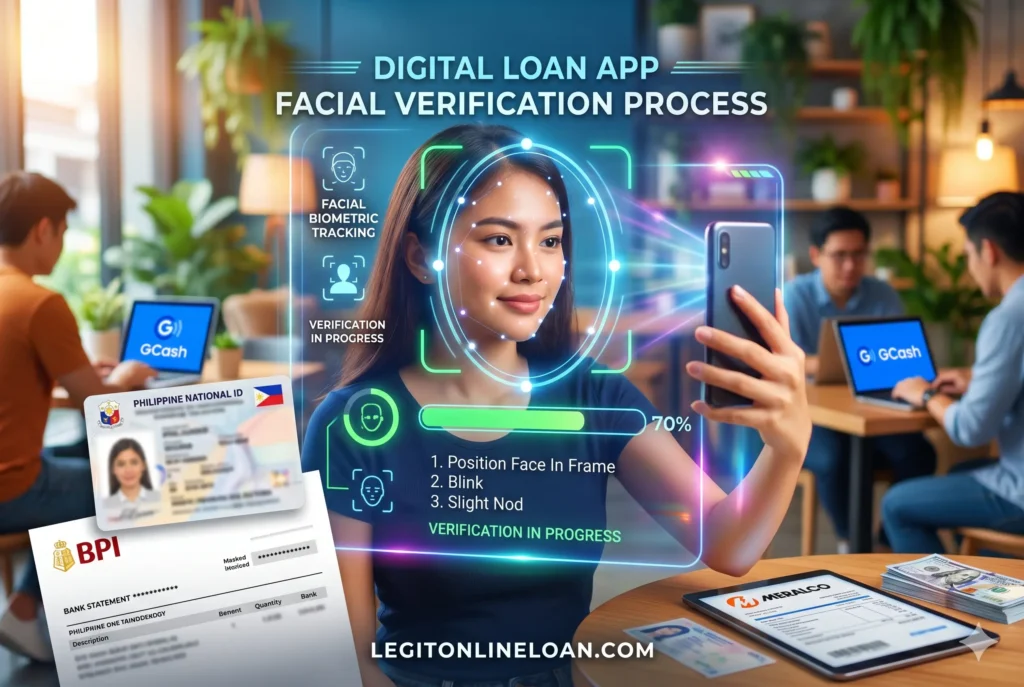
- Selfie verification
- Facial matching
- Liveness detection
Facial verification systems compare a selfie against the submitted ID.
This process helps prevent situations where someone uses:
- Stolen IDs
- Edited identification documents
- Screenshots of another person’s face
- AI-generated identity images
Many modern onboarding systems require applicants to blink, smile, turn their head, or follow movement instructions.
These checks help confirm the applicant is physically present.
OCR Identity Verification and Camera Usage
OCR identity tools extract information directly from identification documents.
Rather than manually typing information, the system automatically reads:
- Full name
- Birth date
- ID number
- Address
This reduces data-entry errors and accelerates approval workflows.
A lender asking for camera access specifically during identity verification is generally consistent with legitimate onboarding practices.
📍 Why Some Lending Apps Request Location Access
Location permissions often generate concern because borrowers assume they are being tracked continuously.
In reality, many lenders only request location data during onboarding.
Legitimate Uses of Geolocation Systems
Geolocation systems may help lenders:
- Verify application consistency
- Detect suspicious application patterns
- Prevent mass fraud operations
- Confirm geographic eligibility
For example, if an applicant claims to reside in Metro Manila but repeatedly applies through devices associated with a completely different region, additional verification may occur.
Location information can also help detect:
- VPN abuse
- Automated application farms
- Multiple-account fraud
When Location Requests Become Concerning
Borrowers should become cautious when:
- No explanation is provided
- Continuous tracking appears unnecessary
- The privacy policy is unclear
- The permission remains active after onboarding
Transparency is often the strongest indicator of legitimacy.
📞 Is Contact Access Legal?
This is one of the most controversial topics in digital lending.
Historically, some abusive lending apps collected contact lists and later used them for harassment-based collection tactics.
This contributed to widespread borrower anxiety.
Why Some Apps Request Contacts
A lender may request contacts for purposes such as:
- Emergency contact verification
- Identity validation
- Fraud-risk assessment
However, a critical distinction exists.
Legitimate lenders should clearly explain:
- Why contacts are needed
- What information is collected
- How data is processed
- Whether consent is required
What Borrowers Should Watch For
Contact access becomes a significant warning sign when:
- The app cannot explain the purpose
- Collection practices are hidden
- Contact scraping appears excessive
- The privacy policy lacks disclosure
The National Privacy Commission has repeatedly emphasized lawful processing, transparency, proportionality, and legitimate purpose when handling personal information.
Borrowers who are concerned about abusive collection behavior should also learn about illegal loan app warning signs, particularly when permission requests seem disconnected from the loan application process.
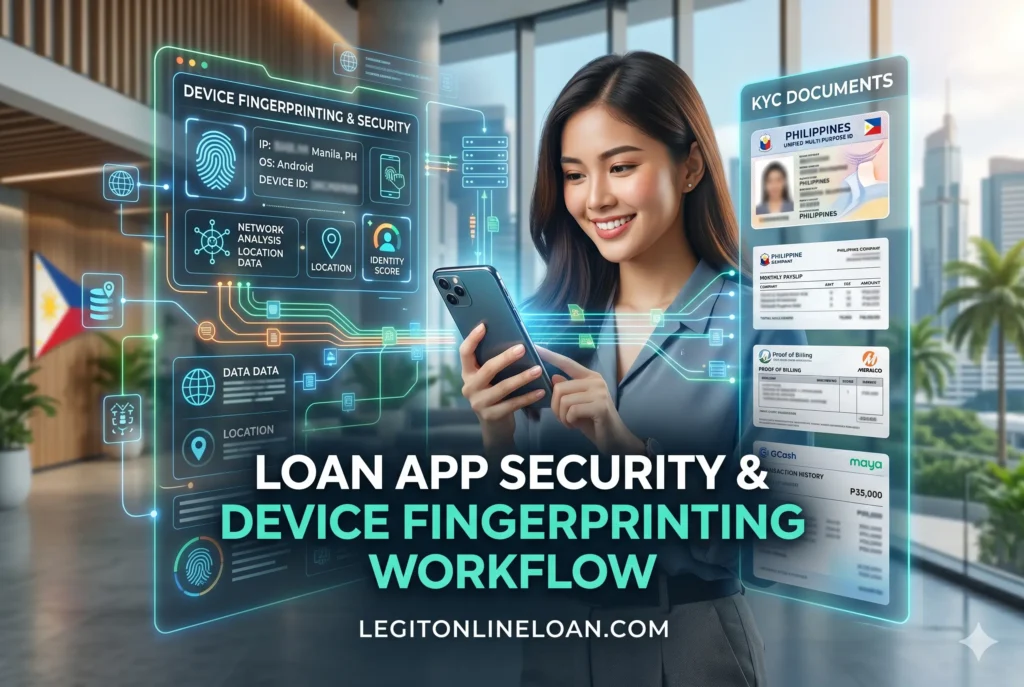
Device Fingerprinting: The Invisible Verification Layer
Many applicants never realize that lenders often analyze device characteristics.
This practice is known as device fingerprinting.
What Device Fingerprinting Actually Does
Device fingerprinting helps lenders identify:
- Repeat fraud attempts
- Multiple accounts
- Suspicious application behavior
- High-risk device patterns
The system may analyze:
- Device model
- Operating system version
- Language settings
- Security indicators
- Application environment
This does not necessarily mean lenders are reading personal messages or photos.
Instead, the objective is often fraud prevention.
Why Legitimate Lenders Use Device Data
Digital lenders face constant attacks from:
- Identity thieves
- Organized fraud groups
- Automated application bots
- Stolen-account operators
Device fingerprinting helps reduce these risks without requiring borrowers to submit additional paperwork.
🚨 Permission Requests That Deserve Extra Attention
Not every permission request is justified.
Borrowers should evaluate whether a permission is logically connected to lending activities.
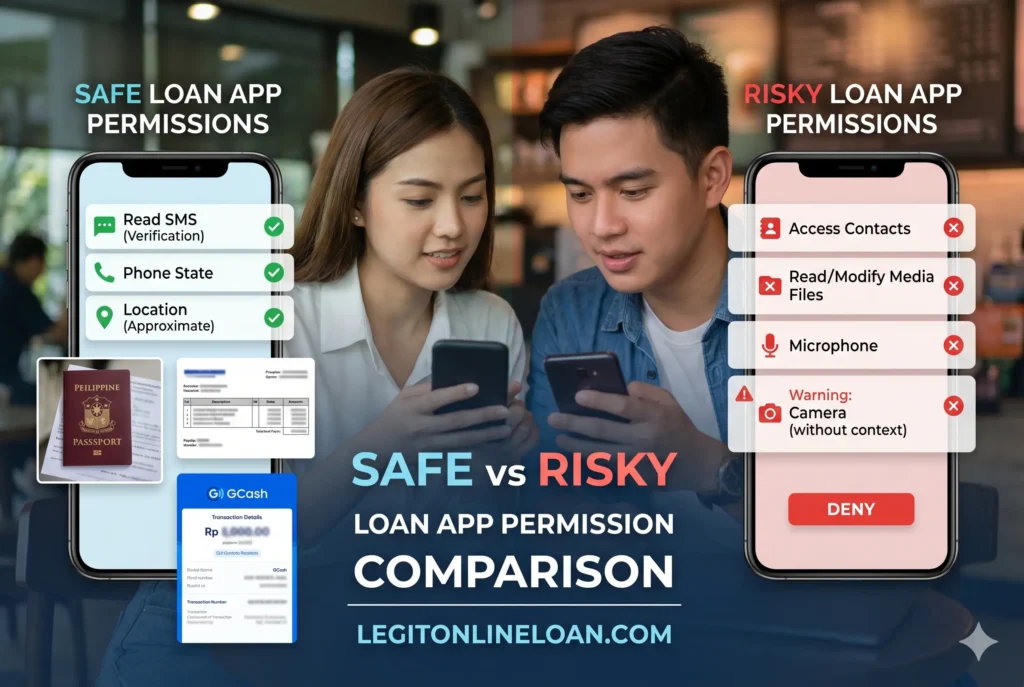
Generally Reasonable Permissions
These permissions frequently support lending operations:
- Camera access
- Document upload access
- OTP verification
- Limited location access
- Device verification data
Permissions That Require More Scrutiny
These may deserve closer review:
- Full contact list harvesting
- Continuous background location tracking
- Microphone access without explanation
- Accessibility-service access
- Excessive device control permissions
A useful question is:
“Would a lender reasonably need this permission to verify identity, assess risk, or service the loan?”
If the answer is unclear, further investigation is appropriate.
Quick Risk Matrix
| Permission Type | Typical Risk Level | Trust Assessment |
| Camera | Low | Usually necessary |
| Selfie Verification | Low | Common KYC requirement |
| Device Verification | Low-Medium | Fraud prevention |
| Location Access | Medium | Context dependent |
| Contacts Access | Medium-High | Requires clear disclosure |
| Microphone Access | High | Requires strong justification |
| Accessibility Access | High | Requires careful review |
What Happens If You Deny Permissions?
Many borrowers fear that granting permissions will expose them to risk.
Others refuse all permissions immediately.
Both approaches can create problems.
Why Rejection Can Occur
If critical permissions are denied, lenders may be unable to:
- Verify identity
- Validate documents
- Confirm authenticity
- Complete anti-fraud checks
As a result:
- Applications may be delayed
- Verification may fail
- Approval probability may decline
Not All Permissions Affect Approval Equally
Camera access often has a direct impact because identity verification depends on it.
Other permissions may simply trigger additional manual review.
The important point is that permission denial does not automatically indicate wrongdoing by the lender or the borrower.
It usually reflects limitations in the verification workflow.
😟 Borrowers Who Fear Blackmail or Contact-Shaming
Many Filipino borrowers search this topic because they have heard stories involving aggressive collections.
Those fears are understandable.
Several years ago, complaints emerged involving certain digital lenders that allegedly contacted individuals outside the borrower relationship.
This history continues to influence borrower perceptions today.
However, it is important to separate:
- Legitimate identity verification
- Fraud prevention processes
- Improper collection practices
An app requesting camera access for facial verification is very different from an organization engaging in abusive debt collection behavior.
Borrowers concerned about aggressive recovery tactics should learn more about collection harassment from lending apps and understand the difference between lawful collections and prohibited conduct.
How SEC-Registered and Legitimate Lenders Typically Handle Verification
Legitimate lenders generally follow structured onboarding processes.
These often include:
- Mobile number verification
- OTP authentication
- Government ID submission
- Selfie verification
- Income validation
- Risk assessment
- Loan approval review
Many borrowers mistakenly assume every permission request is suspicious.
In reality, several verification layers exist because fraud attempts continue to increase across digital financial services.
Borrowers interested in the verification side of lending can also explore how SEC registered lenders verify identity to better understand modern onboarding requirements.
Differences Across Applicant Types
Verification may vary depending on employment profile.
Employed Applicants
Often provide:
- Employer details
- Payroll information
- Income documents
Self-Employed Applicants
May submit:
- Business documentation
- Transaction records
- Bank statements
Freelancers and Gig Workers
Increasingly rely on:
- Platform earnings records
- E-wallet transaction history
- Client payment records
- Digital income evidence
These alternative verification methods are becoming more common across Philippine fintech platforms.
NPC Privacy Principles Every Borrower Should Know
The National Privacy Commission promotes several principles that borrowers can use when evaluating lending apps.
Legitimate Purpose
The lender should clearly explain why information is collected.
Transparency
The borrower should know:
- What data is collected
- How it will be used
- Who may receive it
Proportionality
Data collection should be appropriate for the lending purpose.
A permission request should not be excessive relative to the service provided.
These principles provide a practical framework for evaluating whether a permission request appears reasonable.
For official privacy guidance, borrowers can consult the National Privacy Commission and applicable Philippine data privacy regulations.
Signs a Permission Request May Be Reasonable
Before rejecting an app solely because it requests permissions, consider whether the request:
✅ Supports identity verification
✅ Helps prevent fraud
✅ Is explained clearly
✅ Appears in the privacy policy
✅ Matches the application process
✅ Can be reviewed before granting consent
Apps that provide transparent explanations generally inspire more confidence than those that collect information without context.
Frequently Asked Questions
Why do loan apps need camera access?
Most legitimate lenders use camera access for ID capture, selfie verification, facial matching, and liveness detection during KYC procedures.
Is contact access legal?
Contact access can be lawful when properly disclosed, supported by a legitimate purpose, and processed according to applicable privacy requirements. Borrowers should review the privacy policy and permission explanation carefully.
Can permissions affect approval?
Yes. Some permissions support verification workflows. If critical verification permissions are denied, lenders may be unable to complete identity checks, resulting in delays, additional review, or rejection.
Are device permissions always a warning sign?
No. Device verification is commonly used for fraud prevention and risk assessment. The concern arises when permissions appear unrelated to lending activities or lack transparency.
How can I tell if a permission request is excessive?
Ask whether the permission is necessary for identity verification, fraud prevention, servicing the loan, or regulatory compliance. Permissions unrelated to these functions deserve closer examination.
Conclusion
When evaluating whether online loan app permissions are safe or not, context matters more than the permission itself. Camera access, facial verification systems, OCR identity tools, geolocation systems, and device fingerprinting have become common components of modern digital lending. These technologies help lenders satisfy KYC obligations, prevent fraud, and verify applicants remotely.
At the same time, borrowers should remain attentive to excessive permissions, weak privacy disclosures, and unexplained data collection practices. Reviewing privacy notices, assessing whether permissions match the lending purpose, and choosing lenders that demonstrate transparency can help borrowers make informed decisions. Responsible borrowing involves more than comparing loan amounts and interest rates—it also includes protecting personal data and recognizing the difference between legitimate verification and genuine privacy risks.
Last Updated: May 31, 2026
| Online Loans | Amount |
| 🔰️ Online Loans US | $100 – $5,000 |
| 🔰️ Online Loans UK | $100 – $5,000 |
| 🔰️ Online Loans Pilipinas | ₱ 1000 – ₱ 25,000 |
| 🔰️ Vay Tiền Online VN | 1 triệu – 14 triệu VNĐ |
| 🔰️ Online Loans Sri Lanka | Rs 8000 – Rs 50,000 |
| 🔰️ Préstamos Online México | $ 1,000 – $ 150,000 |
| 🔰️ Préstamos Online en España | 50€ – 300€ |
| 🔰️ Pożyczki Online Polska | 500 PLN – 15000 PLN |
