
For many borrowers in the Philippines, one of the biggest fears begins after a missed payment – not the debt itself, but the possibility that a lender might contact family members, employers, coworkers, or friends.
Stories shared across social media, borrower communities, app reviews, and online forums often describe collection agents sending messages to relatives, calling employers, or threatening public exposure. These experiences create confusion about what is actually legal and what crosses the line into harassment.
The reality is more nuanced. Legitimate digital lenders have collection rights, but those rights are not unlimited. Philippine privacy laws, consumer protection principles, and debt collection standards place boundaries on how online lenders and collection agencies may communicate with borrowers and third parties.
Summary
Legal collection practices online loan apps use generally allow lenders to contact borrowers directly regarding repayment obligations. In limited situations, lenders may communicate with emergency contacts or employers to verify information or locate a borrower, but they cannot legally engage in harassment, public shaming, intimidation, or unnecessary disclosure of debt details. Borrowers who experience threats, abusive communication, privacy violations, or unauthorized disclosure of personal information may have grounds to file complaints with regulators or appropriate complaint channels. Understanding debt collection boundaries helps borrowers respond calmly, maintain communication, and protect their rights while resolving repayment concerns.
Why This Question Creates So Much Fear Among Borrowers
Many borrowers imagine the worst-case outcome immediately after missing a payment:
- Their employer receives a call.
- Their HR department learns about the loan.
- Family members receive collection texts.
- Friends are contacted through social media.
- Personal information is exposed publicly.
The anxiety is understandable because borrowers often see screenshots and stories online showing aggressive collection behavior allegedly performed by some lending operators.
However, an important distinction exists between:
| Legal Collection Activity | Potentially Abusive Collection Activity |
|---|---|
| Contacting the borrower directly | Public shaming |
| Sending repayment reminders | Threats and intimidation |
| Verifying contact information | Mass messaging contacts |
| Professional collection calls | Harassing repeated calls |
| Using authorized collection agencies | Unauthorized disclosure of debt details |
This distinction is where borrower rights become extremely important.
What Legitimate Online Loan Apps Are Actually Allowed to Do
A legitimate lender is generally entitled to collect a valid debt.
Borrowers sometimes assume that once repayment becomes difficult, all collection activity becomes illegal. That is not how lending works.
When a borrower accepts a loan agreement, the lender gains certain contractual rights, including:
- Sending payment reminders
- Issuing collection notices
- Attempting communication through approved channels
- Assigning accounts to collection agencies
- Pursuing lawful recovery actions
The key issue is not whether collection is allowed.
The key issue is how collection is performed.
Direct Borrower Communication Is Usually Allowed
Most regulated lenders communicate through:
- SMS reminders
- Email notices
- In-app notifications
- Phone calls
- Collection letters
Modern Philippine fintech platforms commonly use automated repayment reminder systems before accounts become seriously delinquent.
Borrowers may receive:
- Due date reminders
- Grace period notifications
- Settlement offers
- Restructuring proposals
- Collection follow-ups
These communications are generally considered normal collection activity.
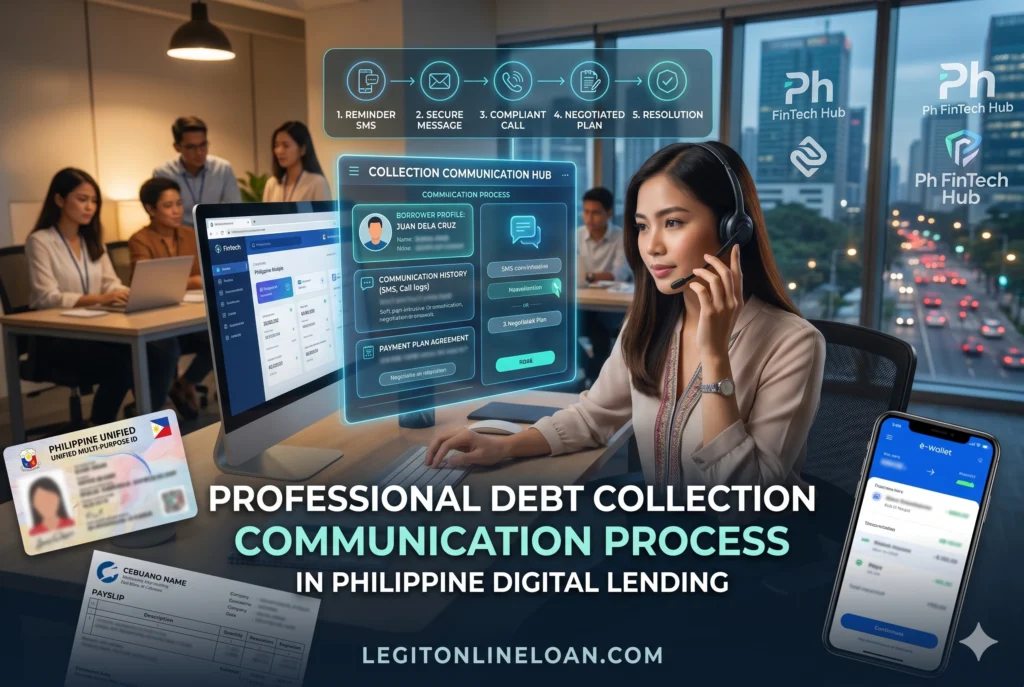
Collection Agencies May Also Become Involved
Some lenders outsource delinquent accounts to collection agencies.
When this occurs, borrowers may begin receiving communication from a third-party collector rather than the original lender.
Legitimate collection agencies should still follow applicable laws and privacy obligations.
A debt being assigned to a collection agency does not remove a borrower’s rights.
Can Online Loan Apps Contact Your Family Members?
This is one of the most searched borrower concerns.
The answer depends heavily on the purpose and manner of contact.
Emergency Contacts Are Not Automatic Debt Guarantors
A common misconception is that an emergency contact becomes responsible for the loan.
That is generally not true.
Emergency contacts are typically collected for:
- Identity verification
- Fraud prevention
- Locating borrowers who become unreachable
- Application validation
An emergency contact usually does not become legally liable for repayment unless separate contractual obligations exist.
When Contacting Family Can Become Problematic
Problems arise when collection activity shifts from locating a borrower to pressuring unrelated individuals.
Examples that may raise concerns include:
- Revealing loan balances unnecessarily
- Sending repeated collection texts to relatives
- Threatening family members
- Demanding payment from people who never signed the loan
- Using relatives as leverage
The more collection efforts involve disclosure of private financial information to third parties, the greater the potential privacy concerns.
Why Some Borrowers Report Family Contact Incidents
Many digital lending apps collect significant contact information during onboarding.
Borrowers concerned about data access often search for resources like online loan app permissions explained because they want to know how applications access phone data and contact lists.
Legitimate lenders increasingly rely on:
- Device fingerprinting
- Facial verification
- OTP authentication
- Identity matching systems
Rather than broad contact harvesting practices that have generated regulatory concerns in past years.
Can Lenders Contact Your Employer or HR Department?
Employer contact creates a different legal and practical issue.
Many employed borrowers fear embarrassment more than the debt itself.
Employment Verification Is Different From Debt Collection
During application review, lenders frequently verify employment.
Verification may involve:
- Confirming employer existence
- Confirming work status
- Confirming company contact details
- Validating income documentation
This verification often occurs before approval.
It is not automatically a collection activity.
What Happens After Repayment Problems Begin?
After delinquency occurs, some lenders may attempt to verify whether employment information remains accurate.
However, employer communication should not become a tool for humiliation.
Professional lenders generally recognize that aggressive employer disclosure creates significant compliance and reputational risks.
Employer HR Departments and Collection Concerns
Employer HR departments are often contacted because they represent an official communication channel.
Yet there is a substantial difference between:
- Confirming employment status
and
- Informing the employer that the borrower owes money
The latter raises much greater privacy concerns.
Borrowers should document any communications suggesting excessive disclosure of personal financial obligations.
Where Legitimate Collection Ends and Harassment Begins 🚨
Many borrowers do not realize that the biggest issue is often not collection itself.
The issue is harassment.
Common Signs of Potentially Abusive Collection Behavior
Warning signs may include:
- Threats of arrest without legal basis
- Public shaming campaigns
- Posting borrower information online
- Sending messages to unrelated contacts
- Excessive call frequency
- Threatening language
- Intimidation tactics
- False legal claims
These practices are frequently mentioned in borrower complaints.
Public Shaming Is Particularly Problematic
One of the most criticized collection practices involves public exposure.
Examples include:
- Posting names publicly
- Sharing photos
- Broadcasting debt information
- Group messaging contacts
Debt collection should focus on recovering legitimate obligations.
It should not be transformed into a campaign of social pressure or humiliation.
What Philippine Privacy Rules Mean for Borrowers
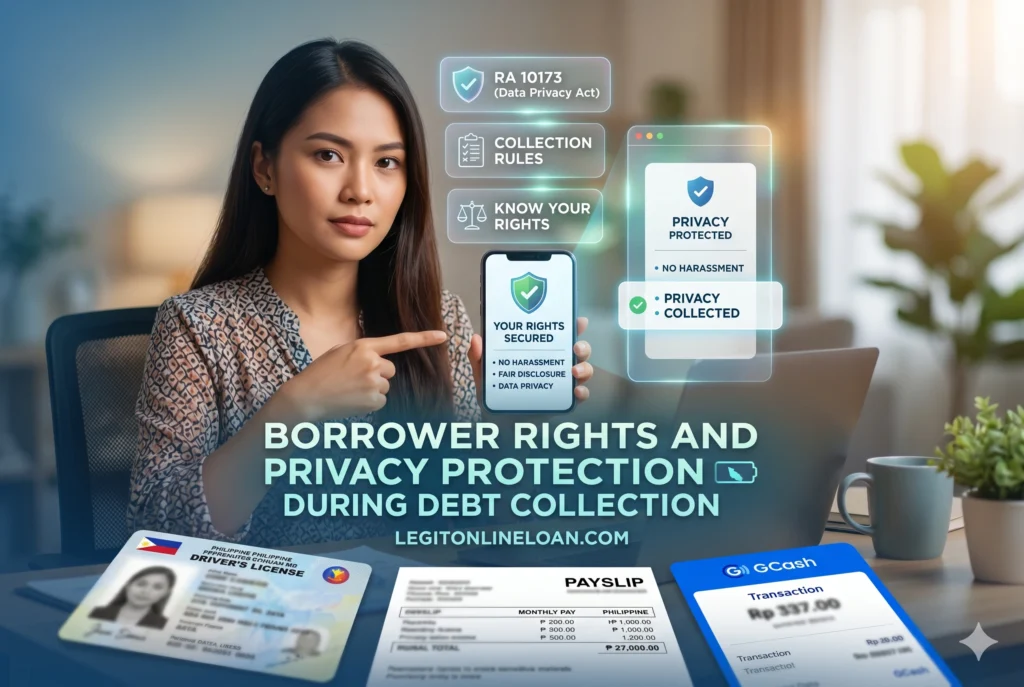
Privacy considerations play a major role in digital lending.
The Philippines has established privacy protections overseen by the National Privacy Commission.
Borrowers increasingly file complaints involving:
- Unauthorized data use
- Excessive collection disclosures
- Contact information misuse
- Improper sharing of personal information
Consent Does Not Mean Unlimited Permission
A borrower may grant certain permissions during application.
That does not automatically create unlimited authority for every type of collection activity.
Consent generally has boundaries.
Questions often examined include:
- What information was collected?
- Why was it collected?
- How is it being used?
- Is the use proportional to the stated purpose?
These considerations become especially important when third parties are involved.
Data Access Practices Continue to Evolve
Modern fintech onboarding increasingly relies on:
- Selfie verification
- Liveness detection
- Government ID matching
- Bank account verification
- E-wallet validation
This shift reduces reliance on broad contact access methods that previously attracted regulatory scrutiny.
What Borrowers Should Do If They Receive Threats
Panic often leads borrowers to stop communicating entirely.
Ironically, disappearing usually makes repayment problems worse.
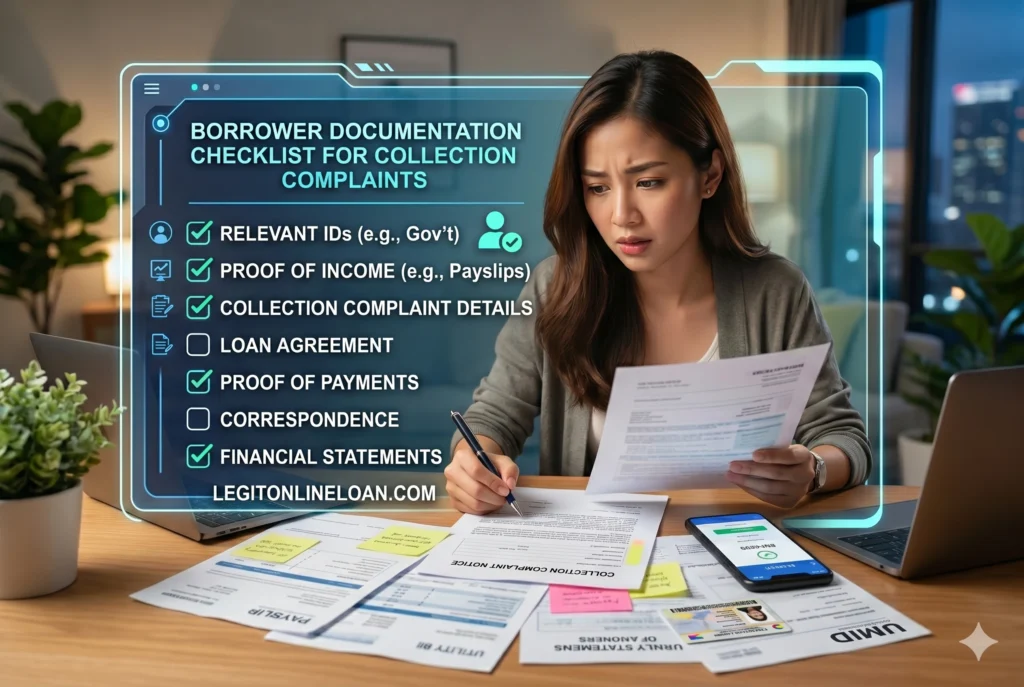
Step 1: Preserve Evidence
Document everything.
Save:
- Screenshots
- SMS messages
- Emails
- Call logs
- Voice recordings where legally permitted
- Social media messages
Evidence becomes extremely important if complaints are later filed.
Step 2: Continue Professional Communication
If repayment difficulties exist:
- Explain circumstances honestly
- Ask about restructuring options
- Request settlement terms
- Keep communication documented
Borrowers who remain responsive often experience better outcomes than borrowers who disappear.
Step 3: Verify the Collector
Before sharing information:
- Confirm company identity
- Request official details
- Verify account references
- Confirm collection authority
Scammers sometimes impersonate collectors.
Step 4: Escalate Serious Complaints
Potential complaint channels may include:
- Privacy regulators
- Consumer protection channels
- Appropriate government agencies
- Internal lender complaint departments
The correct channel depends on the nature of the alleged misconduct.
Why Responsible Communication Usually Produces Better Outcomes
One of the most consistent patterns seen across digital lending portfolios is that avoidance rarely improves a delinquent account.
Borrowers often stop answering because they fear:
- Judgment
- Embarrassment
- Employer exposure
- Family disclosure
Yet many regulated lenders prefer repayment arrangements over prolonged collection efforts.
Communication can create opportunities such as:
- Payment extensions
- Partial settlements
- Structured repayment plans
- Temporary hardship accommodations
This reality is often overlooked in online discussions focused entirely on negative experiences.
Borrower Situations That Commonly Cause Confusion
A Family Member Receives a Collection Text
The critical questions are:
- What information was disclosed?
- How often did communication occur?
- Was the person an emergency contact?
- Was the purpose locating the borrower or pressuring the family member?
The details matter.
An Employer Receives a Phone Call
Borrowers should determine:
- Who was contacted?
- What information was disclosed?
- Was employment merely verified?
- Were debt details revealed?
Different facts can lead to very different conclusions.
A Borrower Receives Threats of Public Exposure
Threats involving:
- Social media publication
- Community posting
- Contact blasts
- Public humiliation
often raise concerns beyond ordinary collection activity and should be documented carefully.
How Regulated Digital Lenders Typically Approach Collections
Lenders operating within regulatory expectations generally focus on:
- Borrower communication
- Repayment reminders
- Collection escalation processes
- Documentation standards
- Complaint management
Their objective is normally account recovery rather than public embarrassment.
This is one reason borrowers researching legit SEC registered lenders Philippines often place significant importance on lender licensing and regulatory standing before borrowing.
Similarly, many repayment concerns can be reduced by learning why regulated loan apps reject applications, because lenders with stronger underwriting standards often maintain more structured operational controls throughout the loan lifecycle.
Quick Answer: Can Lenders Legally Contact Your Family or Employer?
Yes, limited contact may occur in certain circumstances.
However:
- Family members usually do not become responsible for the debt.
- Employers are not automatically entitled to debt details.
- Collection activity should not become harassment.
- Public shaming is not a legitimate collection strategy.
- Borrowers have privacy-related rights.
- Threats and intimidation should be documented.
- Responsible communication often produces better outcomes than avoidance.
Frequently Asked Questions
Can lenders message my contacts?
Some lenders may contact emergency contacts or attempt borrower location efforts. However, widespread disclosure of debt information to unrelated contacts raises significant concerns.
Is public shaming legal?
Public exposure tactics are widely viewed as problematic and may trigger complaints depending on the facts and applicable laws.
What should borrowers document?
Keep screenshots, emails, call records, text messages, collector names, dates, and any threatening communication.
Does my employer have to pay my loan?
No. Employment verification and debt responsibility are separate issues. Employers generally do not become liable for personal loan obligations.
Can collection agencies legally call me?
Yes. Authorized collection agencies may communicate regarding legitimate debts, but they should do so within legal and professional boundaries.
Conclusion
Fear often fills the information gap when borrowers face repayment difficulties. Many people assume that a missed payment automatically gives an online lender the right to contact everyone around them, expose their debt, or pressure family members into paying. That assumption is not accurate.
Legitimate collection efforts and abusive collection behavior are not the same thing. Online lenders may pursue repayment through lawful communication channels, but privacy expectations, borrower rights, and professional standards continue to place important limits on how collection activities should be conducted.
If repayment becomes difficult, remain calm, document all communications, verify who is contacting you, and keep communication open whenever possible. Responsible engagement usually creates more options than avoidance. The most effective borrower protection combines financial responsibility, awareness of privacy rights, and careful selection of reputable lending providers before applying.
Last Updated: June 1, 2026
| Online Loans | Amount |
| 🔰️ Online Loans US | $100 – $5,000 |
| 🔰️ Online Loans UK | $100 – $5,000 |
| 🔰️ Online Loans Pilipinas | ₱ 1000 – ₱ 25,000 |
| 🔰️ Vay Tiền Online VN | 1 triệu – 14 triệu VNĐ |
| 🔰️ Online Loans Sri Lanka | Rs 8000 – Rs 50,000 |
| 🔰️ Préstamos Online México | $ 1,000 – $ 150,000 |
| 🔰️ Préstamos Online en España | 50€ – 300€ |
| 🔰️ Pożyczki Online Polska | 500 PLN – 15000 PLN |
